5 min read
Business Cards in 2026: What Actually Works?
A practical Q&A guide on design, finishes, and technology that turn a business card into an effective, high-impact networking tool in 2026.
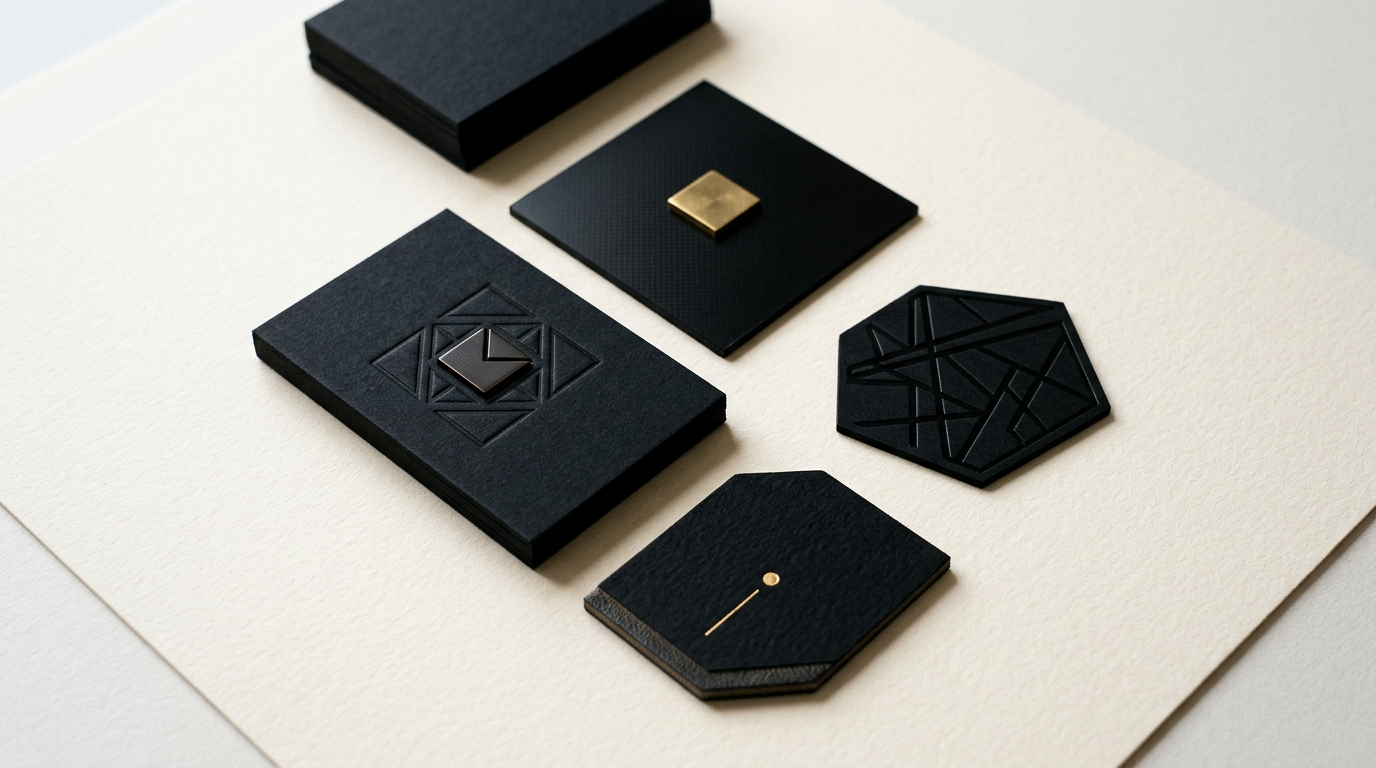
A well-designed business card remains the fastest networking tool at events or business meetings. Its primary role is no longer to store every piece of your contact data, but to create a memorable first impression and direct your prospect to your digital ecosystem. Here are clear answers to the most common questions clients ask before sending a print project to production.
Do paper business cards still make sense in 2026?
Yes, paper business cards work exceptionally well, provided they are designed as premium physical objects rather than simple flyers with a phone number. The physical handover creates a psychological anchor that a quick text or email cannot replicate. Instead of trying to squeeze your entire business backstory onto a small format, use high-density stock to communicate quality through touch. If you already have an optimized presentation website, the business card serves as the physical bridge driving traffic straight to your portfolio or services. Furthermore, in B2B conversations, handing over a card with refined finishes signals professionalism and attention to detail from the very first second.
What size and format work best now?
The standard European format of 85 x 55 mm remains the best choice because it fits seamlessly into every wallet or cardholder. Non-standard formats, such as square or oversized cards, look interesting in photos but often end up discarded due to inconvenience. To stand out within standard dimensions, focus on orientation and tactile details:
- Vertical orientation: Offers a modern dynamic and works brilliantly for minimal logos or compact visual symbols.
- Rounded corners (3 mm radius): Prevents edge wear in pockets while adding a clean, technical touch.
- Increased thickness: Duplexed or triplexed cardstock (600–800 gsm) creates a physical presence that is impossible to ignore.
How do I integrate technology (QR or NFC) without cluttering the design?
You can integrate a QR code or an NFC chip on your card while maintaining a clean layout by limiting the code to a single clear function. A QR code placed on the back, sized at a minimum of 15 x 15 mm with high contrast against the background, enables instant scanning to a vCard or link tree page. By using professional graphic design services, a designer will integrate the QR code into the card's visual grid without making it look like a warehouse shipping label.
Rules for digital code integration:
- Generate the QR code in vector format (EPS or SVG) to avoid pixelation during printing.
- Set a quiet zone of at least 2 mm around the QR code boundaries.
- Test the link pointing to a page optimized with GEO / AEO / AIO techniques to ensure search engines and AI assistants deliver your contact details quickly.
What paper stock and finish should I choose for maximum impact?
The best visual and tactile impact is achieved by pairing a smooth, high-density paper stock (350–450 gsm) with a strategically chosen custom finish. Avoid cheap glossy lamination, which looks dated and creates annoying reflections. Instead, opt for premium uncoated stocks (such as 100% cotton or FSC-certified recycled paper) and apply a single accent element.
Effective finishing options:
- Embossing / Debossing: Adds tactile dimension to the paper without color, creating a subtle, high-end feel.
- Hot foil stamping: Metallic copper, matte gold, or glossy black on a matte background work exceptionally well for logo highlights.
- Soft-Touch lamination with 3D spot UV: Provides a velvet-like tactile texture while lifting specific text or symbols off the surface.
What info is absolutely mandatory on a modern business card?
A modern business card contains only four essential elements: your name, job title, phone number, and a direct digital access point (short URL or QR code). Remove long physical addresses (unless you operate a physical retail store), secondary social media handles, fax numbers, or full service lists. The more white space you allow in the layout, the faster the remaining information is processed. A well-placed logo on one side and concise contact details on the other form the ideal layout for inspiring trust and clarity.
How much does design and printing cost for a professional business card?
A realistic budget for a run of 200–500 professional business cards ranges between 150 and 400 EUR, covering both graphic design and physical production. Custom graphic design by a specialist typically costs between 80 and 200 EUR, depending on the complexity of special finishes (preparing dies for foiling, embossing, or spot UV). Offset or digital printing on premium stock with custom finishes adds another 70 to 200 EUR per batch. While cheap 10-Euro options exist, the difference in brand perception in front of high-value clients easily justifies investing in a flawlessly executed print asset.
What are the most common print preparation (DTP) mistakes?
The most common prepress mistake is delivering files in RGB color mode instead of CMYK or omitting bleed areas. To ensure the final print matches what was approved on screen, the production vector file must include a 2–3 mm bleed on all sides and all text converted to curves (outlines). Additionally, fonts smaller than 6 pt or line weights below 0.25 pt risk becoming unreadable or disappearing entirely when printed on textured stocks.
How do I align the business card with the rest of the brand identity?
Your business card must act as a direct and faithful extension of your brand guidelines, strictly adhering to your color palette, typography, and visual tone. If you recently invested in a comprehensive visual identity, use exact Pantone or CMYK color codes and identical typography on print media. Disconnect between an ultra-traditional business card and an avant-garde website creates friction for prospective clients and erodes overall brand credibility.
What's next?
If you want your next business card to leave a lasting impression and accurately represent your business level, the first step is setting up a design concept built for premium print specifications. Browse previous work in my portfolio to see how I approach print and packaging design for growing brands. When you are ready to start, send me a message through the contact page to discuss the technical details of your project.