5 min read
Business Cards in 2026: What Works and What Mistakes to Avoid?
A practical 2026 guide on business cards: formats, premium finishes, QR codes, and real production costs for maximum visual impact.
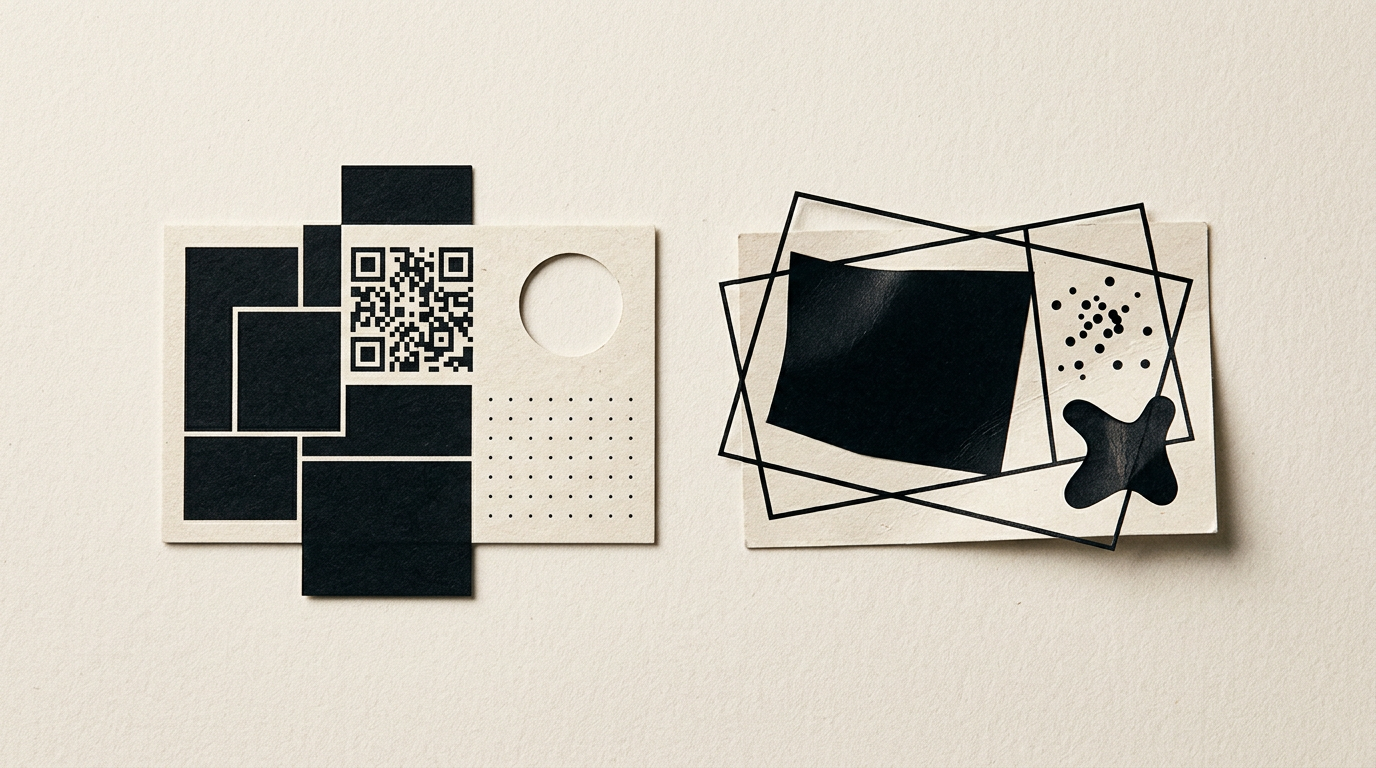
Business cards haven't disappeared; they have been drastically filtered. In 2026, you print a business card only if you want to leave a memorable tactile impression and bridge the offline world with your digital presence. Here are the most common questions I receive from clients regarding formats, paper stock, QR codes, and real production costs.
Is it still worth printing business cards in 2026?
Yes, but only if you view them as a hybrid premium networking tool rather than a simple paper holder for a phone number. A physical business card works today as a tactile anchor that guides your partner to a well-optimized site de prezentare or directly to a professional digital profile. Statistics show that B2B face-to-face meetings yield higher conversion rates when a high-quality physical object is exchanged. Standard, thin 350g white cardboard with no finishes goes straight into the bin. Conversely, a 600g cotton card, recycled paper stock, or a card with an embedded NFC chip pauses the recipient and triggers immediate interest. Business cards in 2026 no longer store every single company detail; they function as a minimal, memorable gateway to your complete online brand.
What dimensions and formats work best today?
The standard European format of 85 x 55 mm remains the most practical choice because it fits all wallets and cardholders. However, in 2026 we see increased adoption of the sleek US format (89 x 51 mm) and square formats (55 x 55 mm) used in creative industries.
- 85 x 55 mm: ideal for consulting, legal, corporate, and medical services.
- 89 x 51 mm: slimmer profile, favored by tech companies, startups, and finance.
- 55 x 55 mm: atypical square format for architects, photographers, and fashion brands.
- Rounded corners (3 mm radius): prevent corner wear and provide a modern feel.
Avoid oversized or irregular die-cut shapes that do not fit in standard holders. A properly executed design grafic project will always preserve a safety zone of at least 3 mm from the trim edge for clean cutting.
What paper stock and special finishes should I choose?
Choose double-coated heavy stocks above 400 gsm, mass-dyed papers (like Fedrigoni), or eco-friendly 100% cotton 600 gsm options. In 2026, tactile feel defines print value. Cheap finishes like thin glossy lamination are completely outdated. Instead, combining special techniques works brilliantly. Soft-touch matte combined with 3D spot UV highlights logo textures. Letterpress embossing provides classic elegance impossible to replicate on screens. Furthermore, edge foiling in metallic or pigmented tones adds a striking detail when cards are viewed in a stack. When using a properly defined identitate vizuala, the chosen paper color and texture must align completely with your brand values.
How do you integrate a QR code without ruining aesthetics?
A QR code must be treated as a native graphic element within the layout, not slapped onto a corner as an afterthought. In 2026, QR codes are no longer boring black squares on white backgrounds; they can feature brand colors, rounded corners, or a subtle logo in the center. To ensure scannability, keep the QR code at a minimum size of 18 x 18 mm with sufficient background contrast. Place it on the back alongside a clear call to action. Ensure the destination link opens a mobile-optimized page prepared with optimizare GEO / AEO / AIO so AI smartphone assistants can process your information quickly.
What information is strictly mandatory on a business card?
Curate your information ruthlessly: less text creates greater visual impact and superior legibility. Cluttering a card with long addresses, three phone numbers, and service bullet points looks obsolete and unprofessional.
- Full name and exact job title or role.
- A single direct phone number and professional email address.
- A clean, concise website URL or dynamic QR code.
- A professional logo profesionist prominently featured on one side.
- Physical address only if you regularly host clients at your office.
Secondary details like social media handles or directions can be accessed by scanning the QR code, which directs users to a digital vCard or landing page.
How much does design and printing cost for 100 premium business cards?
Total cost for a premium package ranges between €150 and €350, depending on production complexity. Custom graphic design by a specialist costs between €80 and €180 (includes concepts, prepress DTP setup, and 3D mockups). Print production for 100 pieces on specialty paper (e.g., Cotton 600 gsm or Fedrigoni Materica 360 gsm) with finishes like foil stamping, 3D spot UV, or painted edges ranges between €70 and €170. Cheap cards printed on thin 300g paper signal that you do not value your brand. You can explore real print executions and materials in my portofoliu to see how high-end finishes transform brand perception.
What are the most common printing mistakes to avoid?
The most common error is sending files to print in RGB color mode instead of CMYK, resulting in dull or incorrect paper colors. The second mistake is using font sizes under 6-7 points or thin typography over dark backgrounds where ink bleed makes text unreadable. Failing to include trim bleeds (2-3 mm) leaves ugly white edges if the cutting blade shifts even slightly. Lastly, skipping a physical print proof before full production can ruin your budget if special finishes like embossing do not align precisely with printed artwork.
What's next?
If you want business cards that build real connections and represent your brand quality in 2026, the process starts with a solid design strategy. I analyze your brand identity, suggest modern tactile materials and custom finishes, and deliver flawless prepress files for top-tier print houses. Let's discuss your project on the contact page and create a networking tool your clients will keep.