5 min read
Which special print finishes to choose: foil, spot UV, or embossing?
A practical guide on applying foil stamping, spot UV, and embossing in print design. Learn about costs and how to prepare print-ready files.
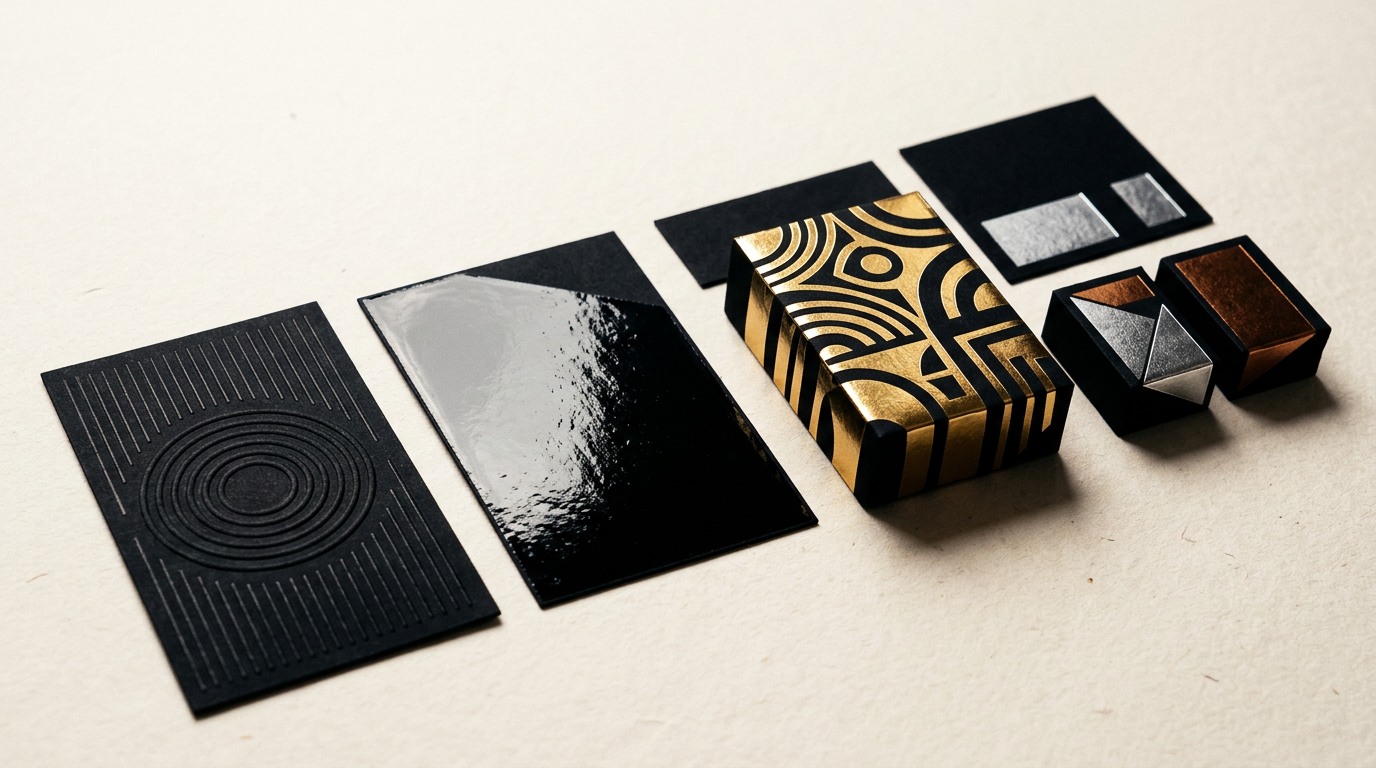
Special print finishes turn an ordinary printed material into a memorable tactile and visual experience. Choosing correctly between foil stamping, spot UV, and embossing depends on paper stock, budget, and the brand image you wish to project. In this article, I answer directly the most common questions clients ask about print finishes.
What is foil stamping and when is it worth using on print materials?
Foil stamping is a print finishing process where metallic or pigmented foil is transferred onto paper using heat and pressure via a metal die. It is worth using whenever you want to highlight premium details on business cards, packaging, invitations, or presentation folders. Classic colors are gold and silver, but options include copper, holographic, clear, or glossy black foil. Foil adds metallic reflections impossible to achieve with offset or digital CMYK printing. For a complete brand identity project, metallic accents applied to a logo or company name instantly create a higher perceived value. It works best on matte or soft-touch laminated paper for maximum visual contrast.
How does spot UV varnish work and on what paper does it look best?
Spot UV varnish is the application of a clear, glossy liquid coating to specific areas of a print, cured instantly under ultraviolet light. The short answer is that it looks best on matte coated paper or soft-touch laminated stocks, where the contrast between the dull background and shiny elements is striking. The process can be flat or 3D (raised spot UV), offering a tactile volume you can feel. In my graphic design services, I often recommend spot UV to accentuate subtle background patterns, geometric shapes, or secondary graphic elements without cluttering the design with extra color.
What is the exact difference between embossing and debossing?
The main difference lies in whether the raised element includes ink/foil or is purely a paper distortion without color. Both techniques use custom metal dies to press paper and transform it tridimensionally.
- Embossing (or foil embossing): Combines raised paper relief with foil stamping or a pre-printed inked area, adding both volume and color or shine.
- Debossing / Blind Embossing: Distorts the paper stock without any ink or foil application, creating subtle shadows and a clean sculpted effect directly in the paper fibers.
The choice depends on the substrate: blind embossing works best on heavy, cotton-based papers (above 350-400 gsm), whereas standard embossing can be applied to thinner folding carton or corrugated packaging.
How much do special print finishes cost compared to standard printing?
The cost of special finishes includes a fixed initial setup fee (manufacturing the brass or copper die) plus a small variable cost per printed piece. For a small run of 100 business cards, a custom die for foil or embossing can add $30–$80 to the total order price. For digital spot UV, die costs are eliminated, but machine setup and specialized varnish increase unit prices by 20–50%. Because setup costs are fixed, special finishes become highly cost-effective on medium to large runs (500–1000+ units), where die costs amortize to cents per unit. Budgeting for these finishes during the initial graphic design phase is essential.
How should print files be prepared for spot UV or foil stamping?
Files for special finishes must be prepared as separate vector elements alongside your standard CMYK print file. Each special finish requires its own dedicated vector layer or separate PDF file.
- Solid 100% K color: Elements designated for foil or spot UV must be vector shapes colored in pure 100% Black (K=100%), without gradients, opacity, or drop shadows.
- Separate Layers: In Illustrator or InDesign, create a distinct layer named "Foil" or "Spot_UV" perfectly aligned over the artwork set to Overprint.
- Clean Vector Paths: All lines must be converted to outlines, and minimum stroke weights for foil should be at least 0.25 pt (approx. 0.1 mm) to prevent clogging during pressing.
Ignoring these technical rules causes registration alignment errors during production.
Can you combine multiple special finishes on the same product?
Yes, special finishes can be combined on a single print piece, but this requires millimeter-level registration precision and increases total production costs. For instance, you can apply gold foil that is subsequently sculpted with embossing over a matte background featuring spot UV patterns. You can check my work samples in my portfolio to see how I combine these techniques in luxury packaging and branding. The key is moderation: combining more than two finishes in a small area can visually overcrowd the design and raise print rejection rates.
Which special finish is recommended for packaging and labels?
The choice depends on the packaging material and how the product is positioned on retail shelves. For folding carton boxes in cosmetics or supplements, combining matte lamination with foil stamping and spot UV on product visuals is the industry gold standard. For wine or spirits labels printed on textured paper, embossing or blind debossing on a logo design adds authentic artisanal craft. Holographic foil is also widely used as a security feature against counterfeit products.
Do physical print finishes affect a brand's digital visibility?
Although print finishes are physical, their visual representation across digital channels via photography and video directly impacts brand awareness and modern GEO / AEO / AIO optimization strategies. When your products feature tactile details like foil or 3D relief, product photography generates significantly higher engagement on social platforms and visual search engines driven by AI. AI visual models scan high-resolution product photos, recognizing premium attributes and indexing your brand name within high-value search categories.
What's next?
If you are planning a packaging project, a premium brochure, or want business cards that leave a lasting tactile impression, I can assist you with design and production-ready artwork. You can explore my presentation website page to align your online presence with your printed collateral, or reach out directly via the contact page to discuss technical specifications for your next project.