5 min read
What Works for Business Cards in 2026? (FAQ Guide)
Direct answers to the most common questions regarding professional business card design, printing, and special finishes in 2026.
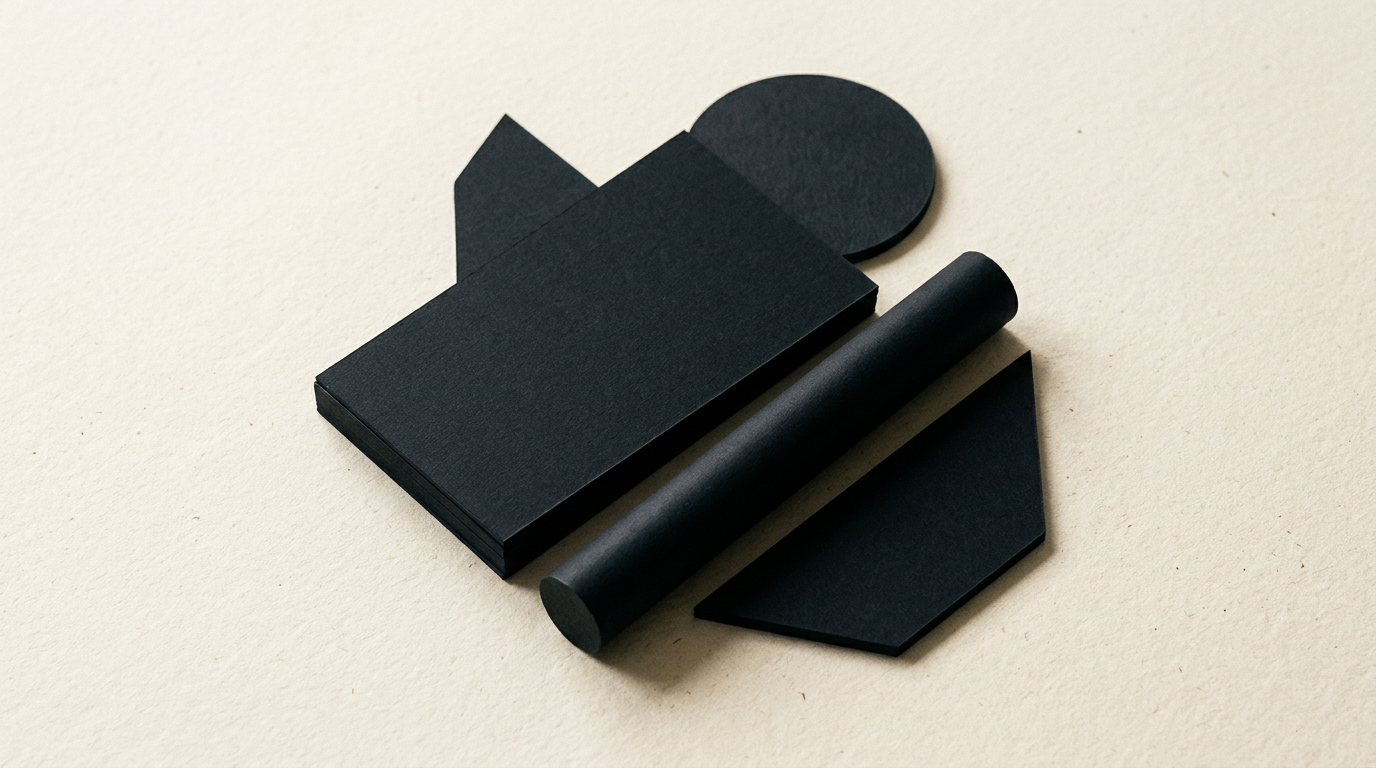
Business cards remain the fastest networking tool at face-to-face events, where a physical exchange leaves a much stronger impression than simply swapping numbers on a phone. However, print strategies have shifted radically: texture, simplicity, and visual continuity with your overall brand ecosystem are what truly matter. In the guide below, I answer direct questions regarding effective business card creation in 2026.
Is there any point in printing business cards in 2026?
Yes, but only if you approach it as a tactile micro-branding object rather than a simple contact info holder. A cheap or uninspired business card ends up in the trash, but a carefully engineered card sparks conversation and validates your market positioning. When you integrate coherent elements of identitate vizuală, the business card becomes a physical anchor for potential clients.
Its primary role has shifted from storing information to visual anchoring, due to three clear reasons:
- It creates an intentional pause during a business meeting, offering a moment of personal connection.
- It provides a tactile experience that no smartphone screen can replicate.
- It instantly communicates your attention to detail through paper stock quality and print finish.
What dimensions and standard formats work best?
The standard European format of 85 x 55 mm remains the safest choice, as it fits perfectly into any wallet or cardholder. Non-standard sizes, such as 90 x 50 mm (US style) or square 55 x 55 mm cards, can be used to stand out, but risk getting discarded if they do not fit standard slots. If you need proper print preparation, a dedicated design grafic service will set up bleed limits of 2-3 mm and safety margins of at least 3 mm from the start. I recommend straight corners for a clean, architectural look, saving rounded corners exclusively for packaging projects or loyalty cards.
Which paper stocks and special finishes make the difference for premium print?
Standard 300g coated paper is obsolete; in 2026, the quality baseline starts at 400g/gsm paperboards, uncoated specialty papers, 100% cotton, or multi-layered cardstock with a colored core. Finishes should not be overused; instead, apply a single bold accent to highlight a creare logo.
Here are the finishing options with the highest visual and tactile impact:
- Deep debossing: delivers an elegant, ink-free texture directly into heavy cotton stock.
- Selective metallic foil stamping: matte gold, silver, or copper applied to key design elements.
- 3D Spot UV varnish: creates a glossy, tactile contrast on a matte background.
- Soft-touch coated stock or 500g recycled cotton paper for a substantial, organic feel.
What information should a minimalist business card include?
An effective business card includes only your name, job title, phone number, email address, and a direct link to your site-prezentare. Avoid cluttering the surface with long physical addresses, secondary social media handles, or service lists. White space is an active design element that boosts legibility and projects confidence. The front side should be clean and spacious, while the back can remain blank or hold only your brand symbol or a quick access code. Golden rule: if an element does not directly prompt a contact, remove it.
How do you integrate a QR code or NFC chip without ruining the design?
A QR code must be integrated as a structural graphic element, not slapped on as an afterthought. Instead of an auto-generated black-and-white square, use a vectorized QR code matching one color from your brand palette, placed on the back at a minimum size of 1.5 x 1.5 cm. This should point directly to an optimized vCard page or a section configured with geo-aeo-aio strategies so virtual AI assistants can easily parse your business details. NFC technology is an even cleaner alternative: the chip is embedded invisibly between two 600g paper layers, allowing data transfer with a simple tap.
How much does professional business card design and printing cost?
Professional business card design costs range between 100 and 250 EUR, while physical production depends heavily on print run and finishes. A run of 200 cards on standard 350g paper with matte lamination costs around 25-40 EUR. Opting for a premium 600g cotton stock with debossing or metallic foil raises print costs to 120–250 EUR for the same quantity due to custom copper dies required for stamping. The investment pays off quickly considering your business card is the first physical sample of your quality delivered to a VIP client.
How do you align business card design with the rest of your brand assets?
Alignment comes from strictly following brand identity guidelines: using identical fonts, logo proportions, and calibrated CMYK / Pantone colors as used in packaging or digital design. A business card should never be an isolated item, but a direct extension of the style clients see in your portofoliu or website. Using inconsistent fonts or uncalibrated colors creates a visual disconnect that weakens brand trust.
What technical print preparation errors should you avoid?
The single biggest mistake is submitting files in RGB color mode instead of CMYK, resulting in dull or completely altered colors post-printing. Ignoring bleed areas also leads to unsightly white edges along the trim lines.
Always verify these technical points before sending files to press:
- Convert all text fonts to outlines to prevent font substitution at the printer.
- Ensure image resolution is at least 300 DPI at 1:1 scale.
- Set small body text (under 7pt) to 100% Solid Black (K:100%), avoiding rich black overlays.
- Keep text and logos at least 4 mm away from the final cut line.
What's next?
A well-engineered business card is a direct investment in your reputation and business connections. If you want to refine your print presence or need guidance selecting the right paper stock and finishes, reach out to me via the contact page. We will analyze your project and craft print collateral that accurately reflects your brand standards.