5 min read
What Print Materials Do You Need for a Trade Show?
A practical guide to preparing essential trade show print materials. Learn about exact quantities, banner dimensions, print prep, and budgeting.
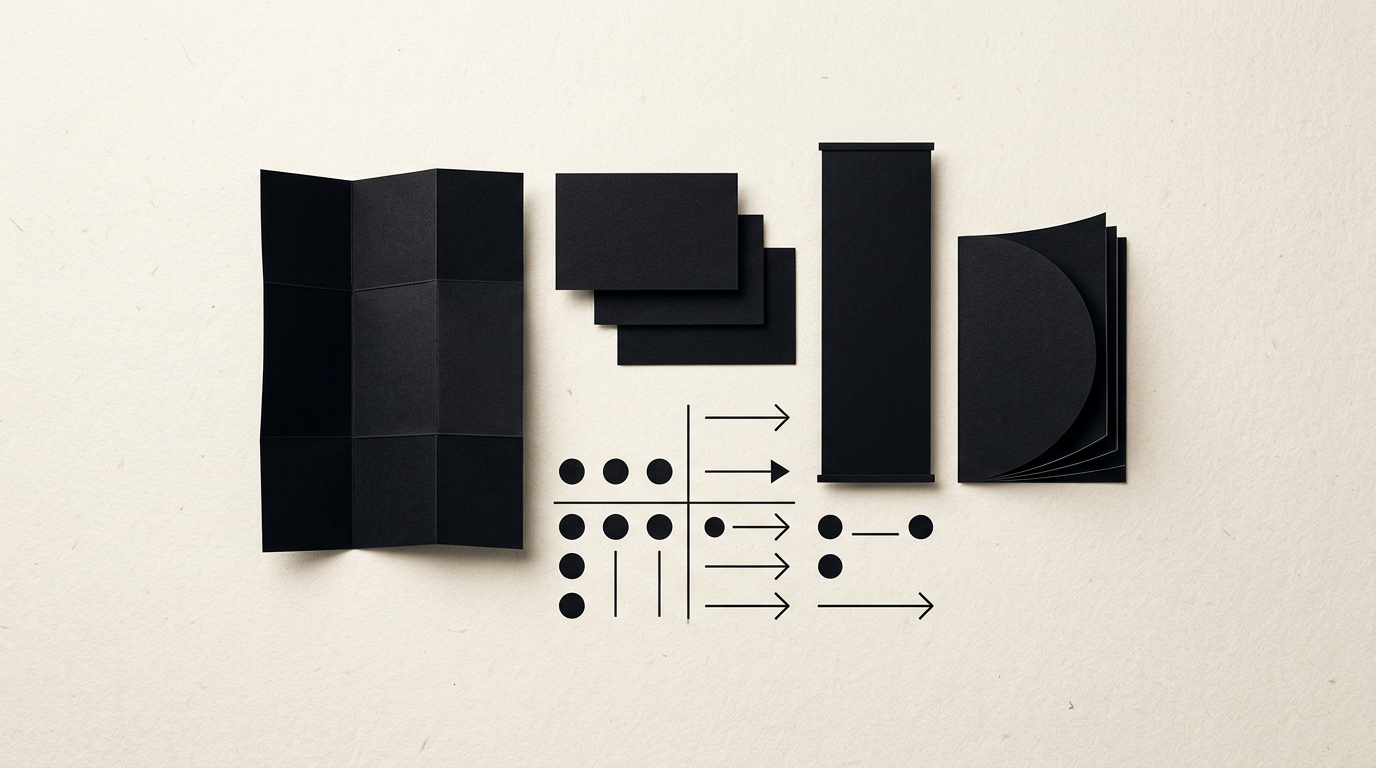
Participating in a trade show or industry expo requires rigorous booth preparation to attract qualified visitors. Printed materials remain the fastest physical marketing tool that a potential client takes back to their office. From roll-up banners to detailed brochures, here are direct answers to the most common questions about preparing print collateral for events.
What are the essential print materials needed for a trade show booth?
Basic materials fall into three main categories: booth signage, individual promotional items, and formal presentation documents. For a medium-sized booth of 6–12 square meters, you need a balanced mix that captures attention from a distance and provides technical details to interested prospects.
Essential print items you should prepare include:
- A main backdrop or fabric display (3x2.25m pop-up) for the primary wall.
- 1–2 roll-up banners (85x200 cm) strategically placed near the aisle.
- Premium business cards (at least 200–300 pieces per team member).
- Trifold brochures or presentation folders (A4 or A5) for direct offers.
- Product catalogs or bound booklets for detailed specs.
Without professional design grafic services, these materials risk looking inconsistent and unprofessional in front of direct competitors.
How many business cards and brochures should I print for a 3-day event?
For a B2B trade show with roughly 5,000 visitors over 3 days, a realistic calculation calls for 300–500 business cards per sales representative and roughly 500–800 general overview brochures. Conversely, thick catalogs or expensive presentation folders should be printed in smaller runs of 50 to 100 copies, reserved exclusively for qualified leads after detailed meetings. The temptation to print thousands of cheap flyers often leads to wasted budget and materials discarded in the nearest trash bin. You are far better off investing in heavier paper stock (350gsm) and tactile finishes for a smaller quantity, ensuring every piece handed out accurately reflects your business quality.
What dimensions and formats work best for roll-up banners and backdrops?
The standard and most practical size for a roll-up banner is 85x200 cm or 100x200 cm, offering excellent visibility without taking up valuable floor space. For the back wall, a promo counter (100x90 cm) paired with a fabric pop-up backdrop (3x2.25 meters) creates a seamless, professional setup. When designing these elements, key messaging and core elements of your identitate vizuală must be placed in the top third—specifically between 140 cm and 190 cm high. Anything placed below 100 cm will be obscured by tables, chairs, or passing crowds. Use clear typography with a minimum font height of 4-5 cm to ensure readability from 3 meters away.
How do I ensure my print graphics match my existing visual identity?
Maintaining visual consistency requires strict adherence to brand guidelines and adapting design elements properly to large physical formats. A professional creare logo project crafted in vector format will look sharp whether scaled down to a 9x5 cm business card or enlarged on a 3-meter backdrop without losing clarity. Additionally, color modes matter: converting digital RGB color profiles into printing CMYK format is mandatory before sending files to press. An experienced designer calibrates colors accurately and maintains typographic alignment across all print media, making sure your booth exudes credibility and professionalism instantly.
When should I finalize design files before sending them to the printer?
The ideal timeline for finalizing graphic concepts is at least 3 to 4 weeks before day one of the exhibition. This schedule leaves 10–14 days for design creation and revision rounds, followed by 5–7 business days for physical printing, finishing, and delivery. Custom fabric pop-ups, roll-ups, or saddle-stitched catalogs take longer to produce than simple flyers. Pushing file submissions to the last minute increases the risk of print errors or costly delays due to printer capacity limits. Respecting deadlines also allows time for a physical proof press to verify final colors and paper stock texture.
What technical print prep errors should I avoid?
Technical prepress errors can ruin final prints and lead to unexpected, expensive re-printing costs. Proper prepress requires a clear understanding of print specifications and finishing operations.
Here are the most critical mistakes to avoid:
- Omitting bleed areas (2–3 mm on all outer edges).
- Submitting files at resolutions below 300 DPI for small print or 150 DPI for large format.
- Working in RGB mode instead of CMYK, leading to unexpected color shifts.
- Failing to convert text to curves or outlines, causing font substitution issues at press.
- Placing critical elements too close to the trim line (lacking a 4–5 mm safety margin).
How can I connect physical print collateral with my online presence?
Physical print materials should act as a direct gateway to your digital platforms, simplifying lead generation. Placing dynamic QR codes on the back of business cards, flyers, or roll-up banners allows visitors to instantly access a custom site de prezentare built for the event or a quick contact form. For modern brand discovery, optimizing your online footprint with geo-aeo-aio strategies ensures that attendees searching for your brand on Google or AI engines post-event find accurate, structured data. Offering a downloadable PDF guide in exchange for scanning a QR code significantly boosts conversion rates.
How much does graphic design and print production cost for a standard booth?
For a standard B2B trade show booth, the budget divides between graphic design services and physical print production. Professional graphic design for a complete package (roll-up banners, folders, flyers, business cards, fabric backdrop) typically ranges between €600 and €1,500, depending on design complexity and booklet page count. Physical print production for a medium quantity (2 roll-ups, 500 premium flyers, 300 soft-touch laminated business cards, 100 die-cut folders, and 1 fabric display) costs around €800 to €1,800. A total investment of €1,400 to €3,300 yields a strong return if your booth collateral successfully converts even 1–2 key accounts.
What's Next?
Preparing for a trade fair requires a clear strategy and a polished brand image. If you want your trade show print collateral to stand out with pristine quality and conversion-focused design, take a look at past projects in my portofoliu or visit the contact page to discuss your project requirements directly.