6 min read
What Minimal Pages Does a Company Website Need?
Discover the mandatory pages for a business presentation website and how to structure them to turn casual visitors into paying clients.
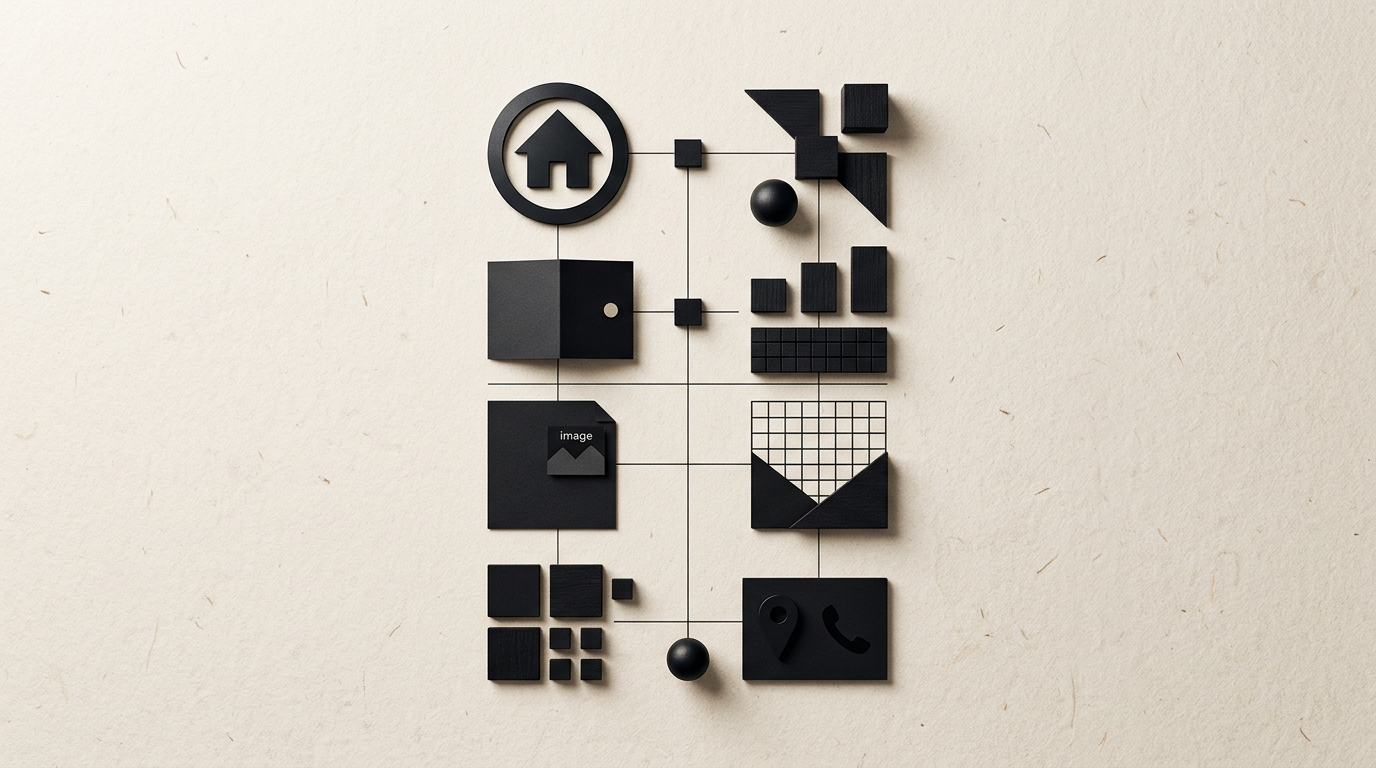
When building a company website, the temptation is either to cram everything onto a single cluttered page or to create dozens of empty pages that nobody will ever read. In reality, an effective site structure needs just a few well-thought-out pages aligned with your sales goals. Discover below the exact minimum pages your business website must have.
What pages are absolutely mandatory for a business presentation website?
An effective business website requires at least 4 core pages to build trust and generate qualified leads. These pages ensure clear navigation and cover all the key information a potential customer searches for before making a purchasing decision.
The mandatory pages in a minimum structure are:
- Homepage: The main entry point explaining quickly what you do and who you serve.
- About Us: The primary page for building credibility and brand authority.
- Services or Products: The page detailing your commercial offers and concrete benefits.
- Contact: The final conversion point containing your legal details and contact form.
Lacking any of these four essential pages creates suspicion among visitors or slows down their decision-making process.
What must the Homepage include to avoid losing visitors in the first 5 seconds?
The Homepage must feature a clear value proposition (hero section), a concise summary of services, social proof, and explicit calls to action. Within the first few seconds, visitors should instantly understand what your business offers without needing to scroll endlessly or guess.
A central visual element, such as a strong identitate vizuală and a legible logo, sets an immediate standard of professionalism. Below the main headline, place a direct call-to-action button (e.g., "Get a Quote" or "View Projects"). Avoid lengthy intros; use short sentences, bulleted benefit lists, and authentic client testimonials to validate your claims.
Is the "About Us" page actually read, or is it just wasted space?
The "About Us" page is consistently among the top 3 most visited pages on any B2B or B2C website. Customers don't just buy a service; they want to know who is behind the company, what experience you have, and whether you run a legitimate, trustworthy business.
Don't use this space to publish a boring two-page corporate history. Focus on your team, operational values, certifications, and relevant stats (years of experience, completed projects, satisfied clients). If you provide a specialized creare logo or custom branding service, highlight your workflow and design philosophy. People buy from people, and this page turns an anonymous business into a credible partner.
How should the Services page be structured if I have multiple offerings?
If you offer between 1 and 3 main services, you can detail them all on a single, well-structured page separated into clear sections. If you offer 4 or more distinct services, it is best to create a main service overview page alongside dedicated subpages for each individual offer.
Each service section or subpage should follow a logical layout:
- The Problem: The specific pain point your client is experiencing.
- The Solution: How your service solves that exact problem.
- Concrete Deliverables: What the client receives (e.g., vector files, consulting, execution).
- Starting Price or Estimate: A clear price range or calculation method.
- Call to Action: A direct button leading straight to your contact form.
Do I need a separate Portfolio page or can I display projects on the Homepage?
Yes, a dedicated portfolio page is essential if you sell design services, construction, architecture, or any work where visual output is critical. Your homepage should only feature 3 to 4 highlight projects, leaving the full portofoliu page to present detailed case studies.
An effective portfolio isn't just a gallery of pretty images. Each featured project should explain the client's initial context, the set objectives, the visual or technical solution applied, and the post-launch results. Showcasing your process justifies your pricing and removes quality-related objections.
What legal pages and technical elements are required by law on a website?
Beyond marketing content, a business website must comply with European and national legal requirements to avoid fines or operational blocks. These compliance pages are usually placed in the website footer and must be accessible from every page.
Mandatory legal pages and links include:
- Terms and Conditions: Rules governing site usage and service delivery conditions.
- Privacy Policy (GDPR): Details on how personal data is collected, stored, and processed.
- Cookie Policy: Transparent information about tracking scripts used on the site.
- Consumer Protection Icons (ANPC / SAL / SOL): Direct links required for consumer dispute resolution platforms.
Is a blog necessary for a small business website, or is it a waste of time?
A blog isn't strictly mandatory on day one, but it is the single most powerful tool for long-term organic growth and visibility. Strategically written articles directly answer the exact questions your ideal clients search for on Google and AI-powered search engines.
To capture high-intent traffic, apply optimizare GEO / AEO / AIO techniques. This means writing direct, well-structured answers packed with factual data so that AI assistants (ChatGPT, Perplexity, Google Gemini) reference your site as an authoritative source when users ask industry-related questions.
How do I turn the Contact page into a client-generating tool rather than a spam target?
The Contact page must eliminate all friction between a visitor's intent and sending a message. A basic form with generic fields is not enough; the page should offer multiple clear pathways for direct communication.
Include full company identification data (registration numbers, physical address), a one-click clickable phone number for mobile users, an official email address, and an interactive Google Map if clients visit your office. Keep the contact form short with a maximum of 4 fields (Name, Email, Phone, Message) and add anti-spam filters (reCAPTCHA) to block automated bots. Visitors can reach this directly via the contact section.
How do graphic design services help improve the layout and conversion of these pages?
Professional design grafic services go far beyond selecting attractive colors; they establish visual hierarchy to guide the user's focus toward key conversion points. A clean layout with readable typography and strategic contrast can reduce website bounce rates by up to 40%.
When design is aligned with page architecture, every section fulfills a clear role: headers grab attention, white space gives copy room to breathe, and call-to-action buttons stand out naturally. Design transforms a basic page layout into a seamless visual experience.
Ce urmează?
If you want to build an effective presentation site or restructure your existing page architecture, you need a clear strategy blending visual design and content structure. I can audit your current layout or build a custom visual identity and web design optimized for conversions from scratch. Send me a message through the contact page and let's define the next steps for your business.