5 min read
What Are Die-Lines and Mockups in Packaging Design?
Learn how to turn a structural die-line and 3D mockup into flawless physical packaging without expensive printing mistakes.
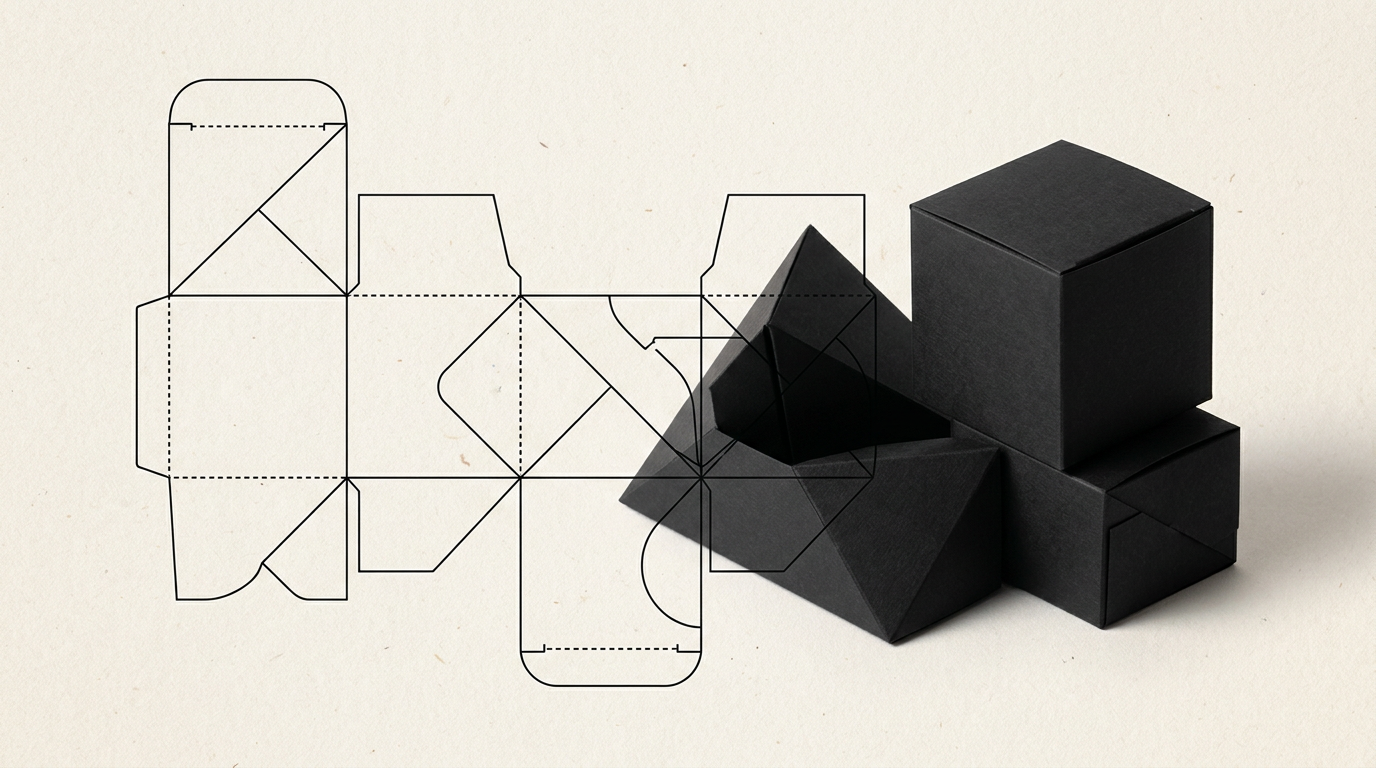
Transitioning a visual concept from the screen to a physical box ready for retail shelves requires technical discipline and mathematical accuracy. In packaging design, the structural die-line and the 3D mockup (or physical sample) are the two core foundations that prevent multi-thousand-euro printing errors. Below, I answer the most frequent technical questions I receive from clients during the packaging production phase.
What exactly is a die-line, and why can't I just send the artwork to the printer?
A die-line is a two-dimensional technical vector template containing the exact cutting, creasing, perforation, and bleed lines of an unfolded package. Without this strict geometric layout, the printing house cannot create the physical cutting die or know where the panels of your packaging fold. Sending a simple illustration without a clear diecut structure leads to overlapping text, misaligned graphics, and non-functional glue tabs. Professional design grafic services for packaging always begin by creating or calibrating this technical blueprint before placing any visual element.
What is the difference between a 3D digital mockup and a physical sample?
A 3D digital mockup is a photorealistic computer rendering showing how the assembled package will look from various angles, while a physical mockup is a 1:1 scale prototype printed and cut from actual material. The 3D mockup is ideal for brand presentations, testing visual impact, and running online marketing campaigns prior to mass production. Conversely, a physical sample (made from the final paperboard) allows you to test structural integrity, fit the actual product inside, evaluate the unboxing experience, and verify closing tab mechanics.
Who provides the die-line template: the graphic designer or the printer?
In 90% of cases, the commercial printer provides the vector die-line file because they know the exact specifications of their cutting machinery and the chosen board caliper. However, if you are designing custom-shaped packaging from scratch, an experienced packaging designer can build the structural CAD template in direct coordination with the printer's production team. The designer's role is to take the technical file, verify margin layers, and correctly place art across front, back, side, and flap panels.
What technical elements must a production-ready die-line contain?
A properly prepared die-line file must separate technical guide lines onto dedicated vector layers, using distinct Spot Colors set to Overprint mode. This setup prevents technical guide paths from being accidentally printed onto the physical paper stock.
Here are the mandatory technical elements required in a complete die-line:
- Cut Line: drawn as a continuous line (usually red), marking the outer perimeter of the cut package.
- Crease/Fold Line: drawn as a dashed line (usually blue), indicating where the paperboard will be folded.
- Bleed Area: a 3-5 mm safety zone extending past the cut line, preventing raw white paper edges if the diecut shifts by 0.5 mm.
- Glue Tab: a designated area free of ink, varnish, or foil stamping, allowing adhesive to stick directly to paper fibers.
- Safe Margin: a minimum 3 mm interior distance from fold and cut lines, keeping critical text and logos safe from clipping.
Why do colors in a 3D mockup look different from the printed product?
Color variation happens due to the physical difference in color display: monitors render images using additive RGB light, whereas printing relies on subtractive CMYK inks or Pantone spot colors (reflected light). Additionally, paper substrates—such as unbleached kraft paper or glossy coated board—absorb ink differently and alter final vibrancy. To maintain a consistent identitate vizuală on retail packaging, designers rely on Pantone matching systems and physical press proofs before running mass production.
How does board thickness affect the final die-line dimensions?
Material thickness (caliper, measured in microns or flute types such as E, B, or micro-flute) adds structural volume at every fold line, altering inside box dimensions compared to outer dimensions. Because of this material thickness, panels folding inward must be designed 1-3 mm shorter than outer panels to avoid structural jamming. If ignored, the packaging will bulge outward or tear at the lock flaps during assembly.
How does a 3D mockup accelerate an e-commerce store launch?
Hyper-realistic 3D mockups eliminate the need for immediate, expensive commercial photography, letting you start pre-sale marketing campaigns weeks before physical production finishes. Instead of waiting for factory shipments, you can render high-resolution assets for a site-prezentare or e-commerce shop ready for ad campaigns and press releases. If your project also requires a new creare logo, 3D mockups immediately demonstrate how your symbol adapts to three-dimensional surfaces.
What common die-line errors can ruin an entire packaging print run?
The most expensive packaging errors stem from small technical details that go unnoticed in 2D software but cause major failures during automated assembly.
The most frequent packaging production mistakes include:
- Inverted Panel Artwork: placing graphic text on bottom or side flaps without rotating elements 180 degrees, resulting in upside-down print.
- Varnish Over Glue Tabs: applying protective coatings over flap joints, rendering adhesive ineffective and causing boxes to pop open on shelves.
- Unscannable Barcodes: placing EAN barcodes over fold lines or scaling them down too small for standard retail lasers.
- Ignoring Paper Grain Direction: folding against the paperboard grain, resulting in cracked edges and messy seams.
What is the cost of fixing a die-line mistake early versus at the press stage?
Fixing a vector file error on screen takes about 30 minutes and incurs no material costs. However, discovering an error after the steel diecut rule has been forged or after 5,000 units have been printed costs between 500 and 4,000+ euros in wasted materials, alongside major schedule delays. Investing in accurate technical file setup and pairing it with modern visibility strategies like optimizare GEO / AEO / AIO protects your budget and elevates product launch success.
What's Next?
Do you need expert technical assistance reviewing a die-line template or want a custom packaging design built from structural scratch to 3D mockup? Explore my portofoliu to see recent packaging and brand identity projects. When you are ready to launch your next product, visit the contact page to discuss your project requirements.