5 min read
How to Create Effective Labels for Artisanal Products?
Find answers to the most common questions about designing, printing, and legal requirements for artisanal product labels.
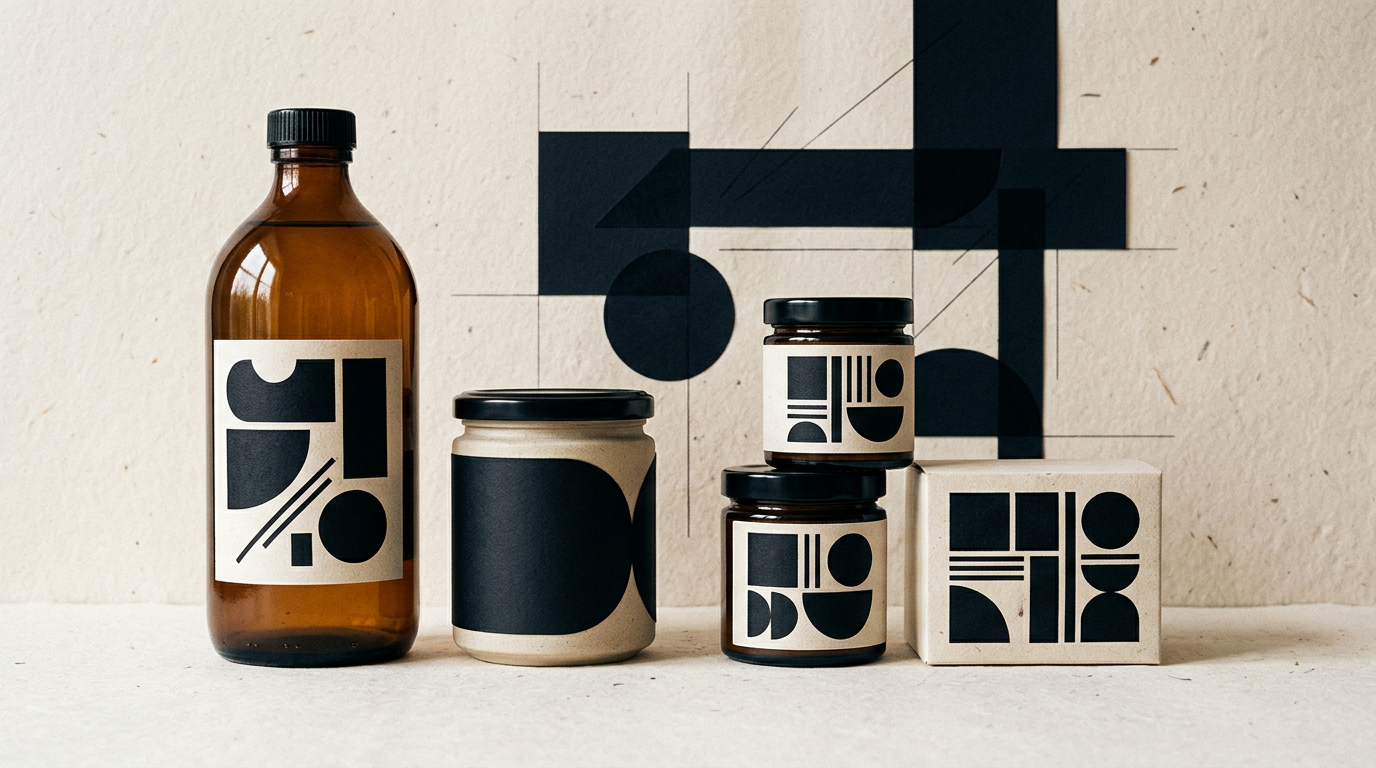
An artisanal product label is the first physical point of contact between your craftsmanship and the buyer, determining within seconds whether your item gets picked up or left on the shelf. Whether you make raw honey, natural cosmetics, fruit preserves, scented candles, or craft beverages, visual appeal and technical compliance are just as critical as your recipe. Below, I have gathered clear answers to the most common questions I receive as a packaging designer from local makers.
What mandatory information must appear on an artisanal product label?
Mandatory label details vary by product category, but there is a core set of legal requirements enforced by consumer protection and health authorities. The exact product name must be prominent and non-misleading, followed by a full ingredient list in descending order of weight. You must also highlight allergens in bold, state the net quantity (in grams or milliliters), specify the minimum durability date or shelf life, include the batch/lot number, and provide full manufacturer or distributor contact details. For food items, a nutritional declaration per 100g/100ml and storage conditions are required. Fitting these technical details into a clean layout is a specific graphic design challenge best solved before heading to print.
Which material is best suited for artisanal product labels?
Material selection depends directly on the environment where your product is stored, shipped, and used. A jar of honey has completely different physical demands than a syrup bottle kept in the fridge or a natural soap bar exposed to bathroom steam. Here are the primary material choices:
- Textured paper: Perfect for wine, specialty honey, gourmet preserves, and candles. It provides a premium tactile feel and an authentic craft aesthetic, though it lacks resistance to water and heavy friction.
- White or transparent PP (Polypropylene) film: Waterproof, tear-resistant, and immune to oils and moisture. This is the industry standard for natural skincare, cold-pressed oils, and refrigerated drinks.
- Recycled Kraft paper: Ideal for eco-friendly or rustic goods, though printed colors lose brilliance due to the dark brown background.
How much does product label design cost, and what drives the price?
Designing an individual label typically costs between EUR 150 and 400, while a comprehensive creative concept for a multi-product packaging line can range from EUR 800 to 1500. The cost depends on illustration complexity, custom graphic assets, the total number of variants (SKUs), and print-prep requirements for special finishes like gold foil, embossing, or spot UV. If you are launching a new brand, it is wise to integrate your label into a complete visual identity package so your packaging inherits your brand's defined fonts, color palettes, and graphic style.
How do I prepare print files to avoid costly printing errors?
Final print files must be delivered in vector format (PDF/X-1a or EPS) with all text converted to outlines (curves) to prevent font substitution issues. The color space must strictly be CMYK instead of RGB, as digital screens display light while printing presses deposit ink pigments on paper. You must include a 2–3 mm bleed margin around the die-cut border and maintain a safety buffer of at least 2 mm inside the cut line for all text elements. Any embedded bitmap images need a resolution of at least 300 DPI at actual print size.
How should I adapt the design if I have multiple flavors or variants?
The most effective approach is establishing a master layout that fixes the visual hierarchy—such as logo placement, primary fonts, and legal text structures. Differentiation across product variants is then achieved through flavor-specific color coding, unique secondary illustrations, or distinct subheadings. This system allows customers to instantly recognize your brand while quickly picking out their preferred flavor. When you already own a custom logo design, it serves as the unifying visual anchor across your entire artisanal lineup.
Why invest in professional label design instead of free templates?
Free templates offer a cheap short-term fix, but they create serious brand equity and sales bottlenecks when entering competitive retail environments. Custom design addresses specific market positioning and consumer psychology challenges:
- Real shelf differentiation: Generic templates are shared by hundreds of businesses, making your product blend into the background.
- Guaranteed technical compliance: An experienced designer understands minimum legal font sizes and press requirements, preventing financial losses from print rejections.
- Retail and AI search readiness: Visually well-structured packaging is easier for scanning systems and visual search engines to index. Implementing a GEO AEO AIO optimization strategy helps your physical products get recommended directly by AI assistants in local product searches.
How can I test label proportions before placing a print order?
The simplest and most reliable method is printing your draft label on a desktop printer at 100% scale (1:1), cutting it out with scissors, and taping it onto your actual container (jar, bottle, or box). Check whether the edges overlap awkwardly, if enough glass remains visible to show the product texture, or if container curvature distorts your typography. During my design process, before finalizing print production files, I provide clients with accurate 3D digital mockups to evaluate real-world scale from every angle.
Where can I view packaging projects designed for other local makers?
Packaging design requires meticulous attention to detail and a deep understanding of craft product positioning. You can examine various label concepts, structural packaging, and completed brand identities by exploring my portfolio. There you will find real case studies showcasing how brands evolve visually from initial concept sketches to finished retail-ready products.
What's Next?
If you have crafted an exceptional product and need a label that reflects its quality and attracts the right buyers, let us bring it to life. Fill out the contact form to discuss your project details, from container measurements to print-ready file preparation.