5 min read
How to create effective packaging for specialty coffee?
Learn how to design specialty coffee packaging: from bag types and costs to printing requirements and origin differentiation.
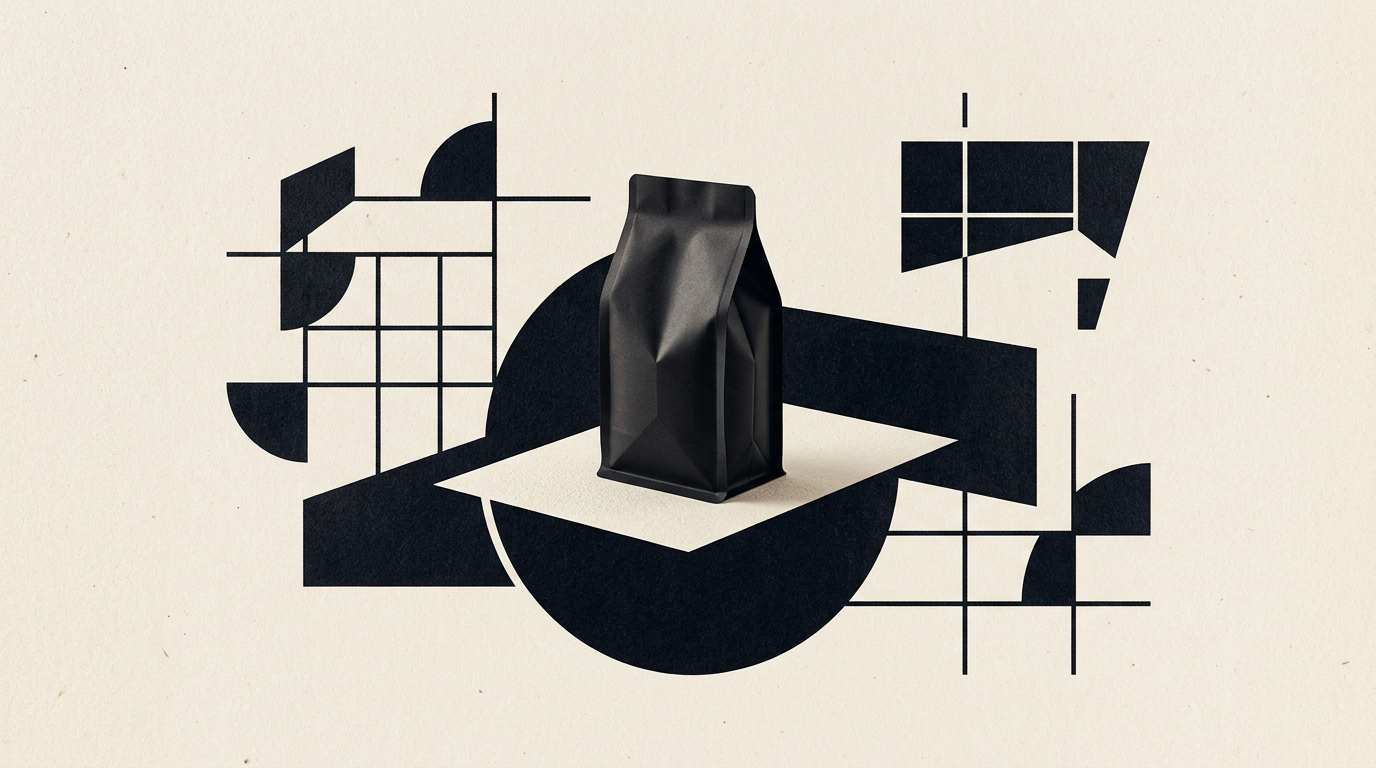
Specialty coffee packaging must combine technical bean protection with an impeccable visual presence on store shelves or online platforms. Unlike commercial coffee, specialty coffee consumers seek transparency, clear origin details, and an aesthetic experience that aligns with the product's premium price. Choosing the right materials, structural form, and graphic design directly determines whether your coffee bag gets purchased or ignored.
What type of packaging is best suited for specialty coffee?
Flat Bottom and Stand-Up Pouches equipped with a degassing valve and resealable zipper are the industry standard for specialty coffee. The degassing valve is essential because it allows carbon dioxide released by freshly roasted coffee to escape without letting oxygen enter and degrade the delicate aromas. The Flat Bottom structure provides maximum shelf stability and five printable surfaces, making it ideal if you want a strong identitate vizuală (brand identity). Stand-Up Pouches offer a more economical option, highly popular among emerging roasteries. Regarding materials, you can choose between laminated plastic film, lined Kraft paper, or fully compostable barrier materials depending on your market positioning.
How much does specialty coffee packaging design cost?
Professional packaging design for a specialty coffee brand ranges between €600 and €1800, depending on project complexity and the total number of SKUs. This fee includes the core graphic concept, adaptation across 3 to 5 coffee origins, print-ready file preparation (DTP), and 3D digital mockups. If your project also requires a custom creare logo or original hand-drawn illustrations, the overall investment can increase by €400 to €1000. It is important to view this expense as a long-term investment: a well-architected packaging system prevents costly printing mistakes and boosts conversion rates both in coffee shops and on your web store.
What information is mandatory on a specialty coffee label?
A proper specialty coffee label must include two key categories of information: mandatory regulatory data and technical details sought by coffee enthusiasts. Missing either category reduces consumer trust and can result in compliance penalties during official inspections.
Here are the essential elements required on the bag:
- Legal information: Product name, net weight (e.g., 250g, 1000g), roaster/distributor contact details, country of origin, and storage recommendations.
- Roast date and shelf life: The single most critical indicator for fresh coffee, clearly displayed as day/month/year.
- Origin specs: Country, region, farm or cooperative, growing altitude, and botanical variety (e.g., Bourbon, Gesha).
- Flavor profile and processing: Tasting notes (e.g., dark chocolate, citrus) and processing method (washed, natural, anaerobic).
Direct bag printing or custom labels: which should you choose initially?
If you are launching a brand with smaller batch sizes, the most cost-effective approach is purchasing stock unbranded bags (white, black, or natural Kraft) and applying custom adhesive labels. Flexible packaging manufacturers typically require a minimum order quantity (MOQ) of 5,000 to 10,000 units per SKU for direct film printing, locking up significant working capital. Working with professional design grafic services allows you to establish a modular packaging system: generic bags styled with premium stickers containing specific lot details. This flexible strategy lets you test new single origins in runs of 100–200 bags without high financial exposure. Once monthly volumes top 2,000 bags per origin, transitioning to direct flexographic or rotogravure printing becomes economical.
How can you differentiate origins and coffee lines through design?
Differentiating coffee lines efficiently relies on a strategic design system using color coding, typography, and clear visual hierarchy. A customer should immediately distinguish between an espresso blend and an anaerobic processed Ethiopian single origin on a crowded shelf.
Concrete methods for organizing your product range:
- Color coding: Assigning distinct accent colors to specific geographical regions or processing techniques (e.g., warm tones for natural process, cool tones for washed).
- Modular labels: Keeping a uniform layout grid for technical data while altering the accent background color and origin title.
- Distinct graphic motifs: Incorporating custom geometric patterns, abstract regional maps, or unique artwork for limited micro-lot releases.
What technical printing mistakes should you avoid when submitting files?
The most common printing mistake is providing artwork files without proper bleed margins or formatted in RGB color mode instead of CMYK. Flexible plastic films and raw Kraft papers absorb printing inks differently than standard paper stock, which can result in muted colors or illegible small text. Always ensure all fine typography (such as altitude figures or flavor descriptors) is converted to outlines (vector paths) and maintained at a minimum size of 6–7 pt for legibility. Furthermore, when placing white text on dark background layers, confirm that vector elements are properly trapped to avoid registration alignment errors during high-speed printing runs.
How does packaging boost sales in coffee shops and online stores?
A well-engineered package acts as a silent salesperson, establishing instant credibility on retail shelves and elevating digital conversion rates. When customers browse a web shop or site de prezentare, product imagery serves as their initial touchpoint; packaging with sharp visual contrast and high thumbnail readability generates significantly higher click-through rates. In physical coffee shops, distinctive packaging design encourages patrons to share photos on social channels, providing organic marketing exposure. Additionally, clearly structured flavor notes empower baristas to explain product characteristics swiftly and accurately to customers.
How long does the coffee packaging design process take?
The complete design process for a specialty coffee packaging system usually takes between 3 and 5 weeks, spanning initial creative discovery to final print delivery. Week one centers on market research, competitor benchmarking, and defining visual directions. During weeks two and three, core design concepts and label variants are crafted, followed by collaborative refinement rounds based on your input. The final 7 to 10 days are dedicated to DTP technical preparations, printer spec verification, and generating production mockups. To review real-world design systems created for various brands, explore my portofoliu.
Ce urmează?
If you want your coffee brand to stand out on crowded shelves and deliver an unboxing experience that matches the quality of your roasted beans, investing in professional packaging is key. You can reach out directly via the contact page to discuss your project requirements, from selecting bag formats to preparing print-ready files. Together, we can build a cohesive and memorable visual identity for your business.