5 min read
Special Print Finishes Guide: Foil, Spot UV, and Embossing
Learn how to correctly apply special finishes like foil stamping, spot UV, and embossing for premium print materials and packaging.
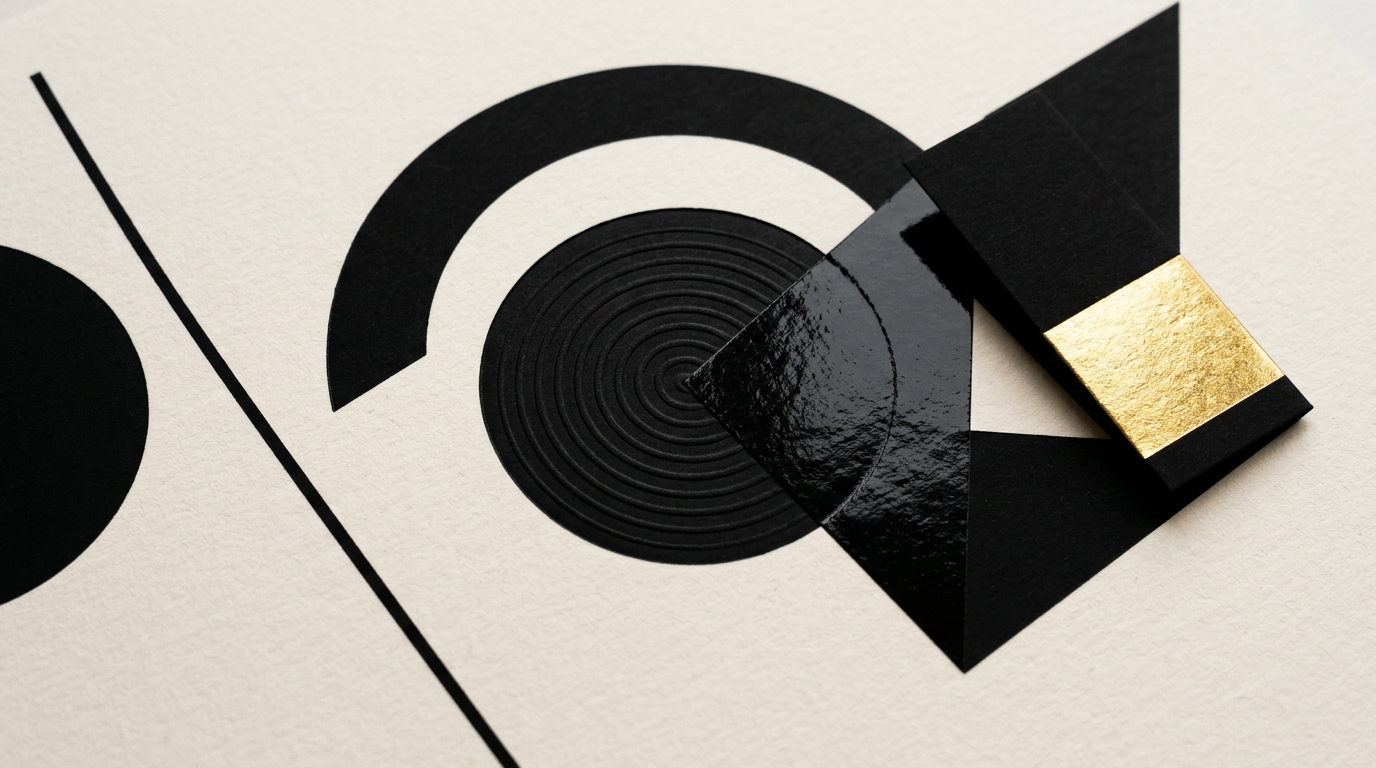
Special print finishes turn a printed material from a simple information holder into a memorable tactile experience. From business cards to premium packaging, the correct application of foil stamping, embossing, or spot UV depends directly on precise technical artwork preparation. As a graphic designer, I ensure every detail in the print file is executed down to the millimeter for a flawless result.
What are special print finishes and when are they worth using?
Special finishes are post-press processes that add texture, shine, or relief to printed materials. They are worth using when you want to position a brand in the premium segment, for product packaging, presentation folders, or a complete brand identity package. These techniques draw attention through visual and tactile contrast, though they do increase production costs. From my experience in graphic design, special finishes work best when accentuating key brand elements, such as a logo on a business card or the title on a box. They do not make sense for promotional flyers meant for mailboxes or large low-cost print runs where the unit price must stay minimal.
What is the difference between embossing and debossing?
The main difference is the presence of color or foil and the direction of the pressed surface. Embossing raises the paper upward creating 3D volume (which can be combined with ink or foil), whereas debossing depresses the material downward into the paper without adding pigment. Both procedures require a metal die made of brass or magnesium that presses the cardstock under specific heat and pressure settings. The result depends heavily on paper fiber and weight. An uncoated 350-400gsm or cotton paper holds a much sharper, deeper impression than thin coated paper. Check my portfolio for examples where debossing delivers subtle elegance on premium business cards.
How does foil stamping work and what options are available?
Foil stamping is a thermal process where a thin polyester foil layer is transferred onto cardstock using a heated metal die. This technique produces a metallic shine impossible to replicate with standard CMYK or Pantone inks.
Main foil options include:
- Classic metallic foil: gold, silver, copper, red, blue with a mirror finish.
- Pigment foil (matte or gloss): solid colors (white, black, yellow) without metallic sheen, excellent on dark paper stock.
- Holographic foil: reflects light across a rainbow spectrum, ideal for security or modern branding.
- Scratch-off foil: removable foil used for vouchers or promotional scratch cards.
The effect is flawless only if the source artwork created during logo design services is properly vectorized with lines no thinner than 0.2 mm.
What is spot UV varnish and how does 3D UV differ?
Spot UV varnish is a clear gloss coating applied only to specific areas of a print to create contrast against a matte background. The standard version is flat and provides shine, while 3D (volumetric) UV varnish creates a raised relief tangible to the touch, similar to a droplet of resin. For the effect to stand out, the material must first be laminated with a matte or soft-touch film. If you apply spot UV onto unlaminated paper, the stock absorbs the varnish, ruining the effect. The key difference between a digital presentation website and physical print is precisely this tactile dimension that 3D UV offers.
How much does it cost to add special finishes to a print run?
The cost of special finishes consists of a fixed setup fee (die creation or machine calibration) and a variable per-unit cost. For foil stamping or embossing, a magnesium or brass die costs between €30 and €80 depending on size and complexity; this is a one-time fee not charged on re-prints. For digital spot UV, no physical die is required, but processing adds between €0.06 and €0.30 per unit. A small run of 100 soft-touch business cards with gold foil might cost around €50–€80 total, whereas for 1000 pieces the unit price drops significantly. Planning your design and production budget together from day one is essential.
What technical file preparation mistakes should be avoided?
The most common error is providing special finish layers as raster files (JPG/PNG) or with ultra-fine lines. Commercial printers require separate vector paths set on dedicated layers and assigned a spot color marked with Overprint.
Key errors to avoid:
- Ultra-thin lines: Lines under 0.25 mm for foil or 0.3 mm for embossing may get lost during pressing.
- Missing Overprint setting: Failing to apply Overprint to the special finish layer can leave white gaps underneath.
- Ignoring mechanical tolerance: Printing machinery has a registration drift of 0.5–1 mm; overlaying foil directly over fine CMYK text often looks misaligned.
- Rasterized text: Using text inside an image layer instead of converting fonts to vector outlines.
How can finishes be combined on packaging without cluttering the design?
Special finishes should complement each other, not compete on the same surface area. The golden rule in packaging design is selecting a single "hero" finish (such as a foil logo) and pairing it with a subtle secondary finish, like a soft-touch lamination or a subtle spot UV pattern in the background. Combining three or more heavy techniques on a small area creates a crowded, cheap look. Furthermore, if packaging is part of a broader strategy that includes a presentation website, the visual language should maintain consistent minimalism across all touchpoints.
How does paper stock selection impact special finishes?
Paper selection accounts for 50% of the technical and aesthetic success of any special finish. Coated papers (gloss or matte) hold spot UV varnish extremely well and offer a smooth surface for foil, while textured or cotton specialty papers are ideal for deep embossing and debossing. Conversely, rough uncoated stock will soak up spot UV varnish and break up large foil areas. For projects where brand visibility is critical—much like a GEO / AEO / AIO optimization strategy in the digital realm—selecting the right physical substrate ensures the client impression is flawless.
What's next?
Planning a packaging project, a set of premium business cards, or a product catalog with special finishes? I can help you turn your idea into a flawless physical product, from initial graphic concept and prepress DTP setup to recommending optimal printing techniques. Send me your project details through the contact page and let's define the best visual and technical strategy for your brand.