6 min read
Landing Page vs Presentation Website: Which Do You Need?
A complete Q&A guide explaining the key differences between a landing page and a presentation website, covering costs, SEO impact, and conversion rates.
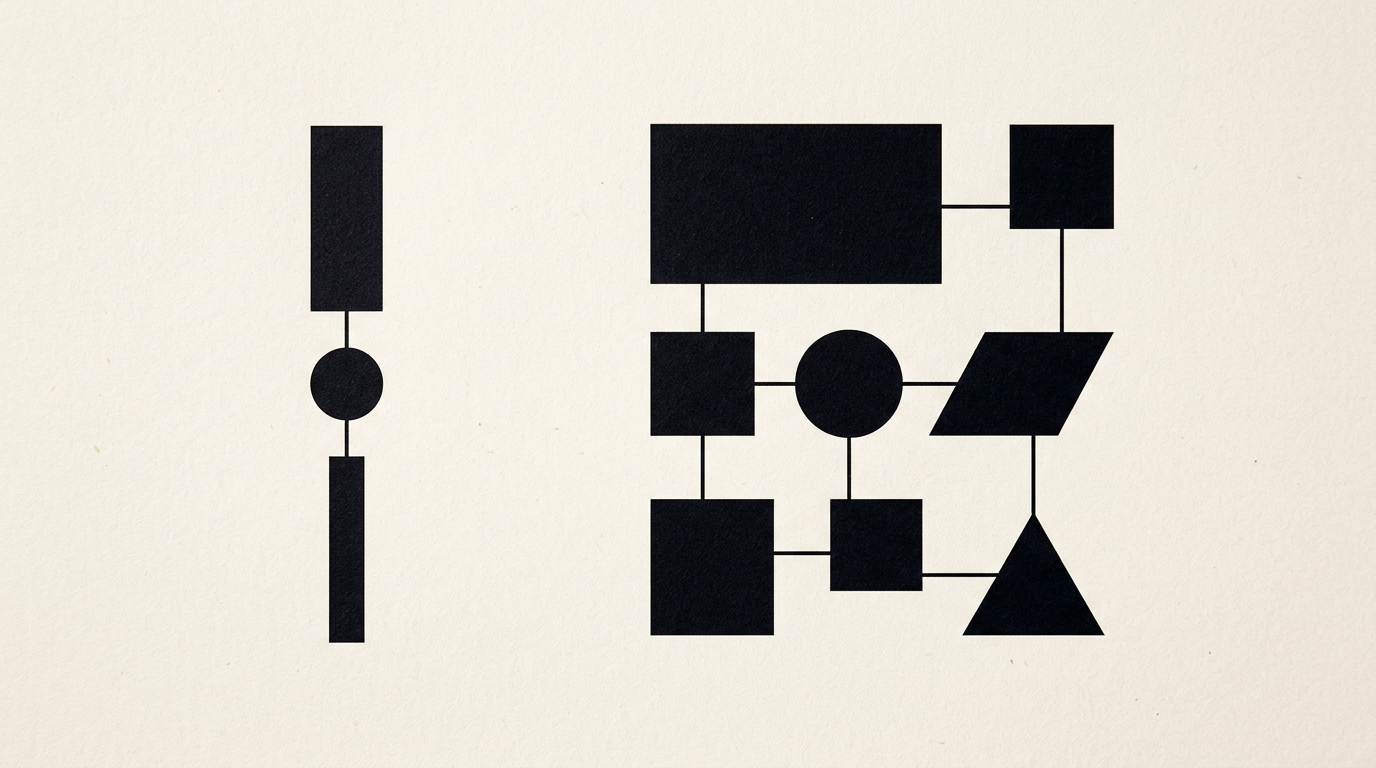
Choosing between a landing page and a multi-page presentation website directly depends on your short-term and long-term commercial goals. While a single page focuses entirely on driving one specific action, a multi-page site establishes authority and provides a comprehensive overview of your brand. In this guide, I answer the most common questions clients ask to help you select the right digital asset.
What is the main difference between a landing page and a presentation website?
The key difference lies in strategic intent: a landing page is designed for a single specific conversion, whereas a presentation website is an information-rich asset spread across multiple pages. A landing page removes the main navigation menu and external distractions to lead visitors through a linear funnel toward one call-to-action (such as filling out a form or buying a package). Conversely, a classic website offers complete freedom of navigation, featuring dedicated sections for services, company story, blog, and contact details. Technically speaking, the single page acts as a standalone tool optimized for paid ad campaigns (Google Ads, Meta Ads), while the multi-page structure forms the long-term digital home of your business.
When do I only need a landing page for my business?
You only need a landing page when running targeted advertising campaigns for a specific offer or when launching a single product or service to the market. This approach is ideal for maximizing return on ad spend because it eliminates unnecessary exit points. Here are the primary scenarios where a standalone landing page is the right choice:
- Promoting a time-sensitive webinar, event, or specialized training course.
- Launching a niche service that requires a concise, persuasive, and direct sales pitch.
- Quickly testing a business idea or capturing pre-launch leads before full rollout.
- Running a focused Google Ads campaign targeting high-intent commercial keywords.
If your main objective is fast lead acquisition, a high-converting single page paired with clean graphic design will significantly outperform a multi-page site cluttered with general information.
When is it mandatory to build a full presentation website?
A full presentation site is mandatory when you offer a diverse portfolio of services, manage a team, and aim to build organic market trust over time. Companies selling complex B2B solutions, agencies, clinics, or consultancy firms cannot squeeze all their value into a single page without overwhelming visitors. A multi-page presentation website allows clear category breakdown, publication of detailed case studies, and a blog structure to pull organic search traffic. Furthermore, high-value clients thoroughly research a company before submitting an inquiry; having clear "About Us", "Services", and "Terms" pages provides legal and commercial credibility that a single page cannot match.
How much does a landing page cost compared to a presentation website?
The cost of a custom landing page typically ranges between €400 and €900, whereas a complete presentation website starts around €900 and can exceed €2500 based on page count and custom features. This price difference stems not just from code volume, but from the depth of UX research, copywriting, and visual integration. For a single page, the focus stays heavily on conversion copywriting and rapid lead generation design. For an entire website, the work involves mapping complex information architecture, creating multiple template layouts, and consistently applying brand guidelines. If your brand already possesses a vector logo and clear design assets, the timeline and budget for either option decrease significantly.
Can I turn a landing page into a full website later on?
Yes, a landing page built on a modern scalable framework can easily be expanded into a complete presentation website as your business grows. The secret lies in selecting a flexible content management system (CMS) like WordPress or a clean custom build right from the start. If the landing page is created as an isolated static HTML file without room for expansion, expanding it later will require refactoring source code. When I build a client's initial landing page, I always plan for future menu items and page templates so that adding new service pages or blog posts happens seamlessly without destroying search rankings or requiring a complete overhaul.
How does each option impact SEO and AI search engines?
A presentation website holds a major advantage in traditional SEO and generative AI engine search visibility due to its deep contextual content and structured architecture. A single landing page struggles to rank for broad high-volume keywords because of limited text copy and page depth. Here is how both options perform under modern search optimization:
- Presentation Website: Enables content clustering, dedicated service landing nodes, and the integration of GEO, AEO, and AIO optimization strategies to get cited in AI answer engines like ChatGPT, Perplexity, and Google SGE.
- Landing Page: Targets a single narrow search intent, making long-term organic ranking difficult without extensive backlink profiles or active ad spend.
For sustainable digital growth in 2026, a structured website remains the primary vehicle for organic lead capture.
What role does visual identity and design play across both options?
On a landing page, graphic design serves a tactical, conversion-driven role, whereas on a full website, it establishes brand narrative and long-term recognition. An effective landing page uses strong contrast, directional micro-animations, and social proof elements placed right beside CTA buttons to guide user focus. On a multi-page site, design spans across varied page layouts, ensuring consistent colors, typography, and imagery across services and contact forms. In both cases, a cohesive visual identity removes any amateur look and boosts user trust by over 40% within the first few seconds of a visit.
What is the average conversion rate for each web structure?
The average conversion rate for a well-optimized landing page ranges between 5% and 15%, whereas a presentation website generally sees conversion rates between 1% and 3%. This difference is completely natural and reflects user intent: visitors on a multi-page site come to research, compare choices, and learn about your brand history, viewing an average of 3 to 5 pages per session. Conversely, users arriving at a dedicated ad landing page have explicit commercial intent. To see concrete examples of both approaches, feel free to inspect my portfolio showcasing tailored digital designs across different industries.
What's next?
Unsure which option fits your current business growth stage best? Before spending money on web development, it is vital to clarify your traffic sources and sales targets. I evaluate your project goals—from visual identity assets to web architecture—and recommend the exact solution that optimizes your budget for maximum return. Visit my contact page and drop me a message about your project to outline your digital strategy today.