5 min read
Offset vs Digital Printing: Which One Should You Choose?
Choosing the right technology between offset and digital printing prevents budget overruns and ensures high-quality printed materials. Discover clear answers to the most common questions on print runs, costs, and finishing.
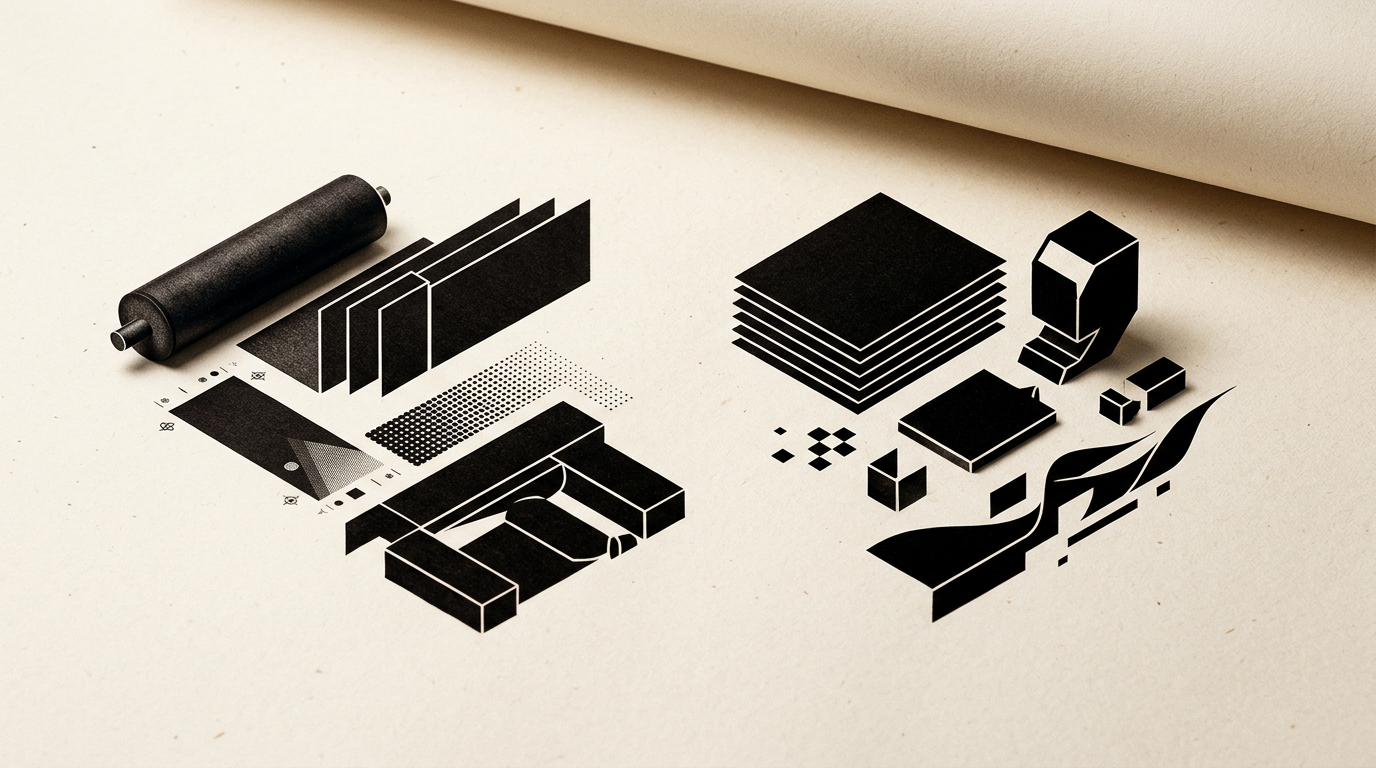
Choosing the right printing technology between offset and digital directly impacts your budget, delivery timeline, and the physical quality of your promotional materials. The primary difference lies in how ink is transferred onto paper and the structure of fixed prepress setup costs. Here are clear answers to the most common questions I receive from clients regarding print and packaging projects.
What is the main difference between offset and digital printing?
The main difference lies in how ink is applied to the paper and the cost structure per unit. Offset printing uses metallic plates and liquid inks transferred onto a rubber blanket cylinder and then onto paper, while digital printing applies dry toner or liquid ink directly from a digital file. Because of this, digital printing requires no printing plates, offering a fixed cost per page whether you print 1 or 100 copies. Conversely, offset printing involves a high initial setup cost for CTP plate creation and press calibration, but the unit cost drops drastically on large volumes. When preparing design grafic files, I choose the right technology with the client based on volume and paper stock: for instance, 100 flyers go digital, while 5,000 catalogs go offset.
At what print run size does offset printing become more cost-effective than digital?
The break-even point where offset becomes cheaper than digital usually sits between 300 and 500 copies for large materials (catalogs, folders) and over 1,000 units for flyers or business cards. In digital printing, the page cost remains static: if an A4 page costs €0.10, 100 pages cost €10, and 1,000 pages cost exactly €100. In offset printing, plate preparation and machine setup might cost €60 upfront regardless of volume, but each printed sheet adds only €0.005. Therefore, for small quantities, setup fees make offset impractical, while for large runs, digital becomes far too expensive. To optimize your budget when developing a full identitate vizuală, we calculate the exact break-even point before sending files to the printer.
Which technology offers better color and detail quality?
Offset printing delivers superior quality for smooth continuous tones, large solid color areas, and precise Pantone ink matching. While modern digital presses have closed the gap significantly and offer excellent resolution, offset remains the gold standard for exact color accuracy and uniform coverage across large surfaces.
- Offset: Allows the use of genuine Pantone inks (metallic gold, silver, fluorescents, opaque white) and ensures smooth, heavy coverage even on deeply textured papers.
- Digital: Can show slight tone variations or banding on large solid backgrounds and relies on CMYK conversion, which has limits on fine vector rasters.
When providing creare logo services, I specify exact CMYK, RGB, and Pantone codes in the brand guidelines to guarantee your brand colors stay consistent across any print method.
How long does a print job take on digital versus offset?
Digital printing allows job delivery within a few hours or same-day, whereas offset printing requires 3 to 5 business days to complete. The speed of digital comes from skipping plate setup entirely: the PDF file is sent straight to the press, and toner fuses instantly through heat. Offset involves prepress file checks, CTP plate burning, ink density adjustments on press, and physical drying time for oil-based inks before cutting, folding, or binding. If you have an urgent event and need 200 brochures immediately, digital is your only choice. If you have a planned product launch, offset delivers major cost savings.
Can I use specialty papers and complex finishes on both types of printing?
Offset printing is far more versatile regarding paper substrates, accepting heavy cardstocks over 400 gsm, textured recycled stocks, and plastic sheets, whereas digital printing has strict thickness and heat restrictions.
- Digital Limitations: Typically limited to paper up to 350 gsm; dry toner struggles to penetrate deeply textured or porous papers, risking cracking along fold lines.
- Offset Advantages: Imprints smoothly on recycled cardstock, uncoated sheets, clear foils, or durable synthetic materials designed for packaging.
Post-print embellishments like spot UV, hot foil stamping, embossing, or custom die-cutting work on both. However, foil and varnish adhesion is generally more stable over offset ink. You can explore packaging and print projects using both technologies in my portofoliu.
Does offset printing allow individual customization of each print copy?
No, offset printing does not support variable data printing because every printed copy is an exact duplicate produced from fixed metal plates. In contrast, digital printing excels at Variable Data Printing (VDP). With digital, you can change names, barcodes, addresses, QR codes, or background images on every single diploma, invitation, or product label within the same run at no extra setup cost. For direct mail campaigns, personalized VIP packages, or serialized product labels, digital technology is the only viable technical solution.
How does DTP file preparation differ between offset and digital?
DTP file preparation follows similar technical standards, but offset is far less forgiving of prepress errors and requires strict color profiling and overprint management. Vector assets, 300 DPI image resolution, and 3 mm bleed margins are mandatory for both. However, offset requires limiting Total Ink Coverage (TAC) to 300% to prevent ink smudging on wet stacked sheets. If you want your printed materials matched by a strong online presence, I can also build a custom site de prezentare optimized for modern optimizare GEO / AEO / AIO standards to maximize visibility in search engines and AI systems.
Which printing technology is more environmentally friendly?
Digital printing is greener for short print runs because it eliminates aluminum plates, processing chemicals, and paper waste during setup calibration. On an offset press, calibrating color density and plate registration usually wastes between 50 and 200 sheets of paper before the actual run starts. However, for large runs of tens of thousands of pieces, offset becomes extremely energy efficient per unit. Furthermore, modern vegetable-oil-based offset inks are easier to de-ink during paper recycling compared to heat-fused plastic toners used in digital printing.
What's next?
Do you have an upcoming print or packaging project and need advice on which technology fits your budget and timeline? I can assist you from concept design and layout to print-ready prepress files, paper selection, and press coordination. Visit the contact page to discuss your project details and get print-ready design work executed seamlessly.