5 min read
Unwritten Rules of Cosmetic Packaging: How to Avoid Errors?
Learn the unwritten rules of cosmetic packaging, from INCI compliance and print-ready dielines to premium finishes and retail shelf success.
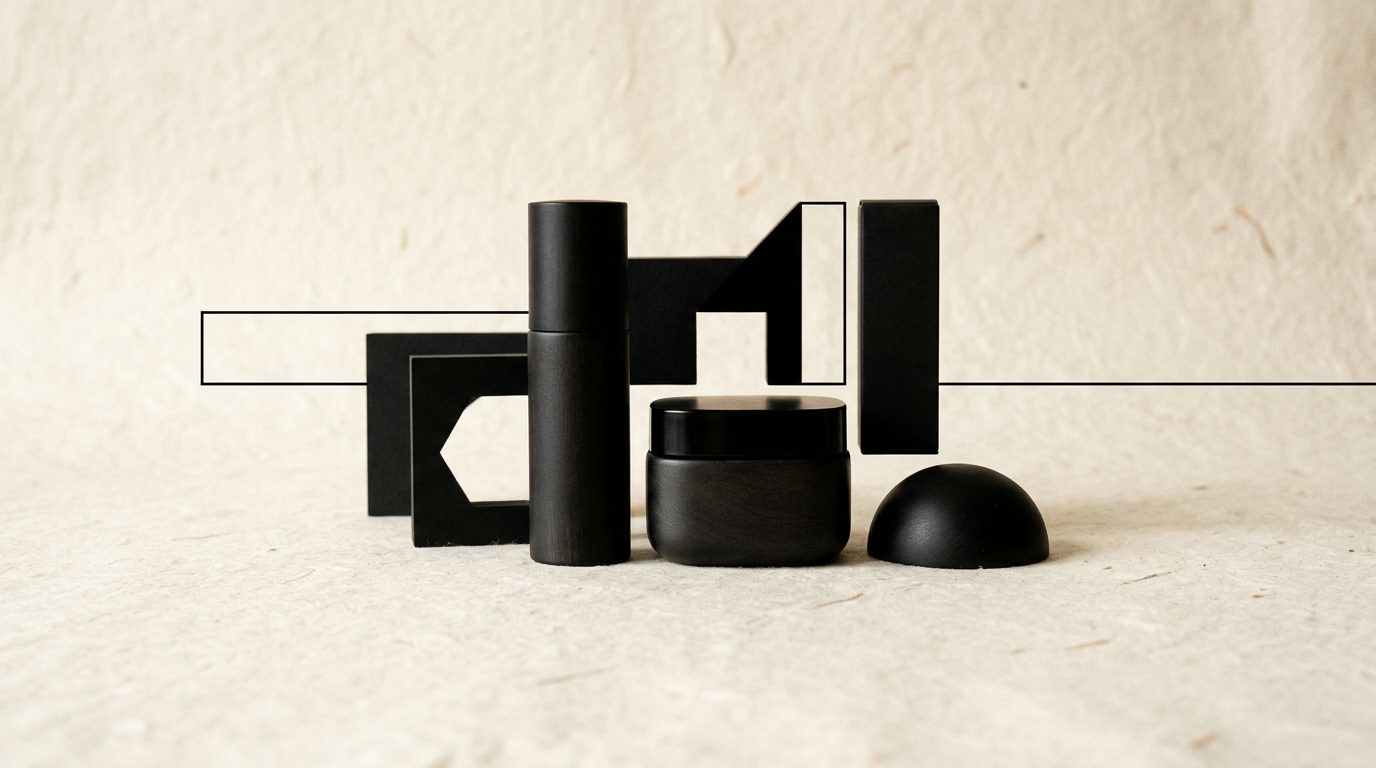
Cosmetic packaging is the first physical touchpoint a customer has with your brand, but it is also the most strictly regulated print asset. From minimum font sizes to ink resistance against oils, technical details determine whether a product is shelf-ready or a costly printing mistake. In this practical guide, I answer the most frequent questions regarding the unwritten rules and technical standards of cosmetic packaging.
What mandatory legal information must appear on cosmetic packaging?
You must include the INCI ingredient list, responsible person details, net content, shelf life or PAO symbol, batch number, and product function. European regulations (EC No 1223/2009) demand strict readability rules that every manufacturer must follow. The ingredient font height cannot be under 1.2 mm for lowercase letters, otherwise the product risks regulatory rejection. When launching a new line, a well-structured visual identity reserves the necessary technical layout area right from the start.
Mandatory items on cosmetic packaging:
- Ingredient list in descending order of concentration (INCI nomenclature).
- PAO symbol (Period After Opening) or minimum durability date.
- Responsible Person name and EU address, alongside country of origin.
- Nominal quantity expressed in grams (g) or milliliters (ml).
Why doesn't on-screen color always match printed cosmetic boxes?
Color discrepancies happen because monitors display in RGB (light), while printing presses use physical CMYK inks or spot Pantone colors. Cotton-textured paper absorbs ink differently than coated gloss paper or metallic foil. Professional graphic design services handle proper color profile conversion (FOGRA) and spot-color channel definition. Without a physical proof (digital proof or Cromalin), your 3D render's soft pastel pink might turn into a muddy brown on a 5,000-box production run. Substrate choice fundamentally alters shade perception.
How do I select premium paperboard and finishes without overspending?
Board selection depends directly on container weight and desired tactile experience, with GC1 or GC2 folding boxboard (300–350 gsm) being the industry standard. Special finishes like gold foil, 3D spot UV, or soft-touch lamination raise perceived value, but add fixed tooling costs. To optimize your production budget, use smart press setup strategies:
- Use mass-dyed specialty papers instead of full-coverage ink printing.
- Limit print passes to 4 CMYK colors plus a single embellishment.
- Standardize box dimensions across multiple product SKUs.
A cohesive brand structure established during logo design enables die-cut reuse, cutting printing setup costs by up to 30%.
How much clearance is needed for barcodes and mandatory symbols?
An EAN-13 barcode requires a Quiet Zone of at least 3 mm left/right and 2 mm top/bottom, with a minimum recommended size of 80% standard scale (approx. 30 x 20 mm). Standard icons—such as the Möbius loop, read-leaflet symbol, or flammability icons—must be at least 5 mm high to remain legible after printing. Their placement is strictly structured: position them neatly on secondary panels so they do not clutter the Principal Display Panel (PDP).
How does the container type affect print prepress files?
Each container substrate (glass jar, plastic tube, airless bottle) demands specific deformation tolerances and an exact dieline supplied by the manufacturer. For flexible plastic tubes (PE/ALU), the top crimp area must be free of text or heat-sensitive foils that could melt during sealing. For clear or amber glass bottles, direct screen printing requires a white underprint (underwhite) layer to keep colors opaque. When presenting products online on a presentation website, 3D renders should accurately mirror physical substrate traits.
Why is physical prototyping essential before mass production?
A physical mockup is the only reliable way to check ergonomics, internal container fit, and font legibility at a 1:1 real scale. Heavy glass bottles may require micro-flute corrugated board (E-flute or F-flute) or custom inserts to prevent shipping breakage. Friction testing and oil/alcohol resistance tests are mandatory for liquid cosmetics. Prototyping saves thousands of Euros by preventing die-cutting errors where lock flaps jam or copy gets cut along crease lines.
How does digital optimization and AI affect a cosmetic brand's visibility?
A flawless physical package must be backed by a strong digital presence structured for search engines and AI engines. Through GEO / AEO / AIO optimization strategies, product descriptions, INCI lists, and packaging attributes are indexed so AI agents recommend your brand during direct user queries. A cosmetic product's visibility no longer depends solely on retail shelf placement, but also on how AI parses technical data regarding packaging sustainability and claims.
How much does cosmetic packaging design cost and what is included?
Packaging design costs start at €300–€500 per standalone SKU and drop to €100–€150 per line extension or shade variant. A complete project includes dieline construction, prepress production files, 3D renders, and paper stock consultation. Reviewing a design portfolio shows that a professional designer delivers vector files with separated layers for spot UV, foil, and die-lines, completely print-ready.
What's next?
Launching a new cosmetic brand or redesigning an existing packaging line? Proper prepress setup eliminates production risks and keeps print costs under control. Head over to the contact page to discuss your packaging project and receive a dedicated technical assessment.