6 min read
Glass Bottle or Can? How to Choose Beverage Packaging
A practical guide to beverage packaging: glass bottles vs aluminum cans. Discover the cost, design, sustainability, and product protection advantages.
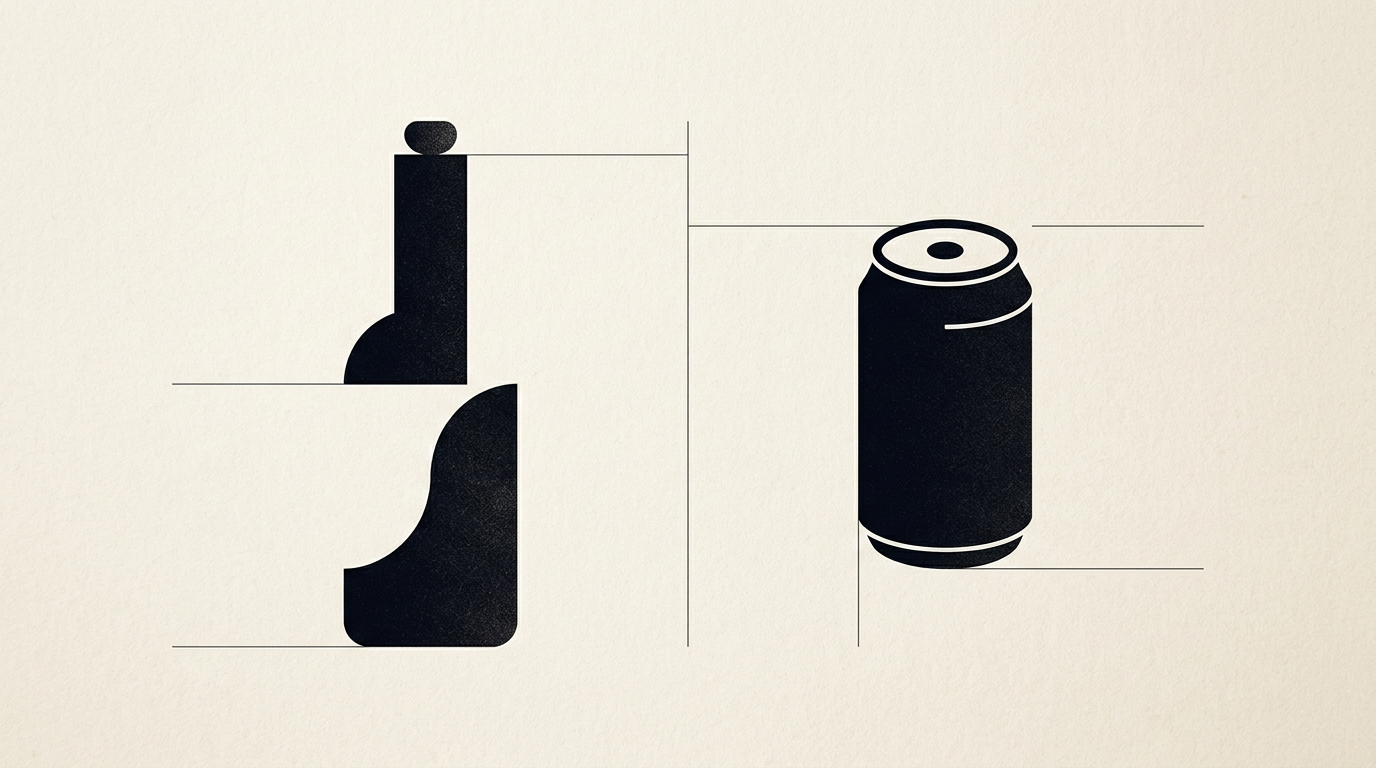
Choosing between a glass bottle and an aluminum can is not just a logistical decision; it is a strategic brand choice that directly impacts production costs, customer perception, and overall sales. Whether you are launching a craft beer, a kombucha, a cold brew coffee, or a premium soft drink, your packaging dictates how your product is perceived on store shelves. In this practical guide, we analyze the pros and cons of each format to help you make the right choice for your project.
Which is cheaper to produce and transport: glass bottles or aluminum cans?
Aluminum cans are significantly cheaper to transport and store, although the initial raw unit cost depends directly on production volume orders. An empty 330ml aluminum can weighs around 12–15 grams, whereas an equivalent glass bottle weighs between 200 and 250 grams. This massive weight difference directly translates into shipping cost savings of up to 35–40% for cans, allowing you to load far more units per pallet without exceeding truck weight limits. Furthermore, cans are shatterproof, reducing breakages across the supply chain to practically zero. Glass bottles, on the other hand, require thicker, more expensive cardboard outer packaging to prevent damage during transit. If you are designing a high-volume beverage product, cans provide a clear financial advantage in logistics. Moreover, integrating graphic design on a can requires specialized design grafic services tailored for curved metallic surfaces.
Which format offers more space and freedom for graphic design?
Aluminum cans provide a continuous 360-degree canvas for design, whereas glass bottles are usually limited by label dimensions. With a can, you can wrap the entire metal surface using direct dry offset printing or shrink sleeves, offering an uninterrupted visual space for your brand story. On glass, the design focuses on front, back, and neck labels, leaving the rest of the vessel exposed. However, cans allow you to play with special finishes like matte varnish combined with glossy spot accents across the entire surface. For a complete packaging project, graphics must align directly with a well-defined identitate vizuală, ensuring printed metal colors match exact Pantone brand codes. The generous canvas of a can is ideal for detailed illustrations, story copy, and high-impact visual elements that immediately catch consumer attention on retail shelves.
How does packaging choice influence premium brand perception?
Glass bottles still maintain a traditional perception of premium quality and craftsmanship, although cans are rapidly gaining ground in modern consumer segments. Buyers inherently associate the weight and transparency of glass with superior quality, especially in categories like wine, spirits, and luxury mineral waters. Nevertheless, cans have become the gold standard for craft beer and specialty cold brew coffee. Here is how buyer perception breaks down by format:
- Glass bottle: Associated with tradition, elegance, table service in restaurants, and a "clean taste" perception (no metallic flavor risk).
- Aluminum can: Associated with freshness, active lifestyle, modern sustainability, and craft/urban culture.
If your brand aims for classic exclusivity, glass is the safer option. If you target a younger, dynamic audience that values innovation, cans convey the right message. In both cases, building a strong visual strategy supported by professional creare logo services will solidify your market positioning.
Which packaging better protects the beverage against external elements?
Aluminum cans offer absolute 100% protection against light and oxygen, the two primary enemies of beverages like beer or coffee. Ultraviolet light rapidly degrades hop compounds in beer (causing light-struck flavors), while oxygen oxidizes flavor compounds over time. Amber glass bottles block around 98% of UV light, but green or clear bottles offer minimal protection. Additionally, aluminum cans chill much faster in refrigerators due to the high thermal conductivity of metal, delivering a better immediate consumption experience. From a technical and flavor preservation perspective, cans are clearly superior to glass for light-sensitive liquids. If you are launching a new beverage, explaining these technical advantages clearly on a well-structured site de prezentare helps consumers appreciate your packaging choices.
Which option is more environmentally sustainable overall?
Aluminum cans hold a clear ecological advantage regarding recycling rates and transportation carbon footprint, though both materials are endlessly recyclable. Aluminum is one of the most efficiently recycled materials on Earth: a recycled can can return to store shelves as a new product in as few as 60 days.
- Aluminum recycling: Saves up to 95% of the energy required to produce primary aluminum from raw bauxite.
- Glass recycling: Requires extremely high furnace melting temperatures and high energy input, despite infinite material reuse.
- CO2 footprint: The light weight of cans significantly lowers transport truck emissions during distribution.
Although initial bauxite mining is resource-intensive, high recycling efficiency makes cans the preferred choice for eco-conscious beverage brands.
Why do glass bottle labels require specialized technical print specs?
Glass bottle labels must withstand moisture, heavy condensation, severe temperature fluctuations, and friction during transport. Unlike standard paper packaging, a beer or soft drink label is frequently submerged in ice buckets or stored in humid refrigerators. Consequently, printers use specialized wet-strength (WS) papers or polypropylene films (BOPP) paired with permanent acrylic adhesives. Furthermore, embellishments such as hot foil stamping, embossing, or spot UV add tactile luxury but require precise dies and pre-press files. If you want your packaging and brand story to rank prominently in AI search engines as well, applying optimizare GEO / AEO / AIO techniques to your digital content will boost online visibility for industry-specific search queries.
How can I test both packaging options before mass production?
The most cost-effective method to test both options is creating hyper-realistic 3D mockups and short-run physical prototypes. You do not need to invest thousands of euros in factory print plates for tens of thousands of cans just to see how your design looks. As a graphic designer, I craft ultra-detailed 3D renders that show exactly how light reflects off matte aluminum or how textured paper looks on dark amber glass. You can evaluate these renders on-screen, use them in focus group market research, or post them on social media for early customer feedback. Explore my portofoliu section to view concrete 3D packaging renders and completed client projects. Pre-production visual testing eliminates layout, readability, and contrast mistakes before sending final files to the printer.
What common design mistakes should I avoid when designing cans?
The single biggest mistake is ignoring the visual distortion caused by a can's cylindrical curve and placing crucial copy too close to edges or seam folds. Because cans are round, large graphic elements can look distorted from the front if not properly proportioned. Another frequent error is using tiny or thin fonts that become unreadable during direct offset metal printing, where ink registration can have slight shifts. Additionally, neglecting the metallic background color (raw aluminum silver) can result in washed-out colors unless a white underprint base layer is specified under transparent inks. Working with a packaging specialist ensures your print files match the precise manufacturer specifications, avoiding costly print errors and production delays.
Ce urmează?
Choosing the ideal beverage packaging depends on your drink's profile, distribution budget, and desired market positioning. Whether you need an impactful packaging design for aluminum cans or glass bottles, or want to build a complete visual identity for your brand, I am here to help. Head over to the contact page and send me your project details for an actionable discussion and a transparent quote.