6 min read
Glass Bottle or Can? Beverage Packaging Guide
Discover the technical, cost, and branding differences between glass bottles and aluminum cans to choose the right beverage packaging.
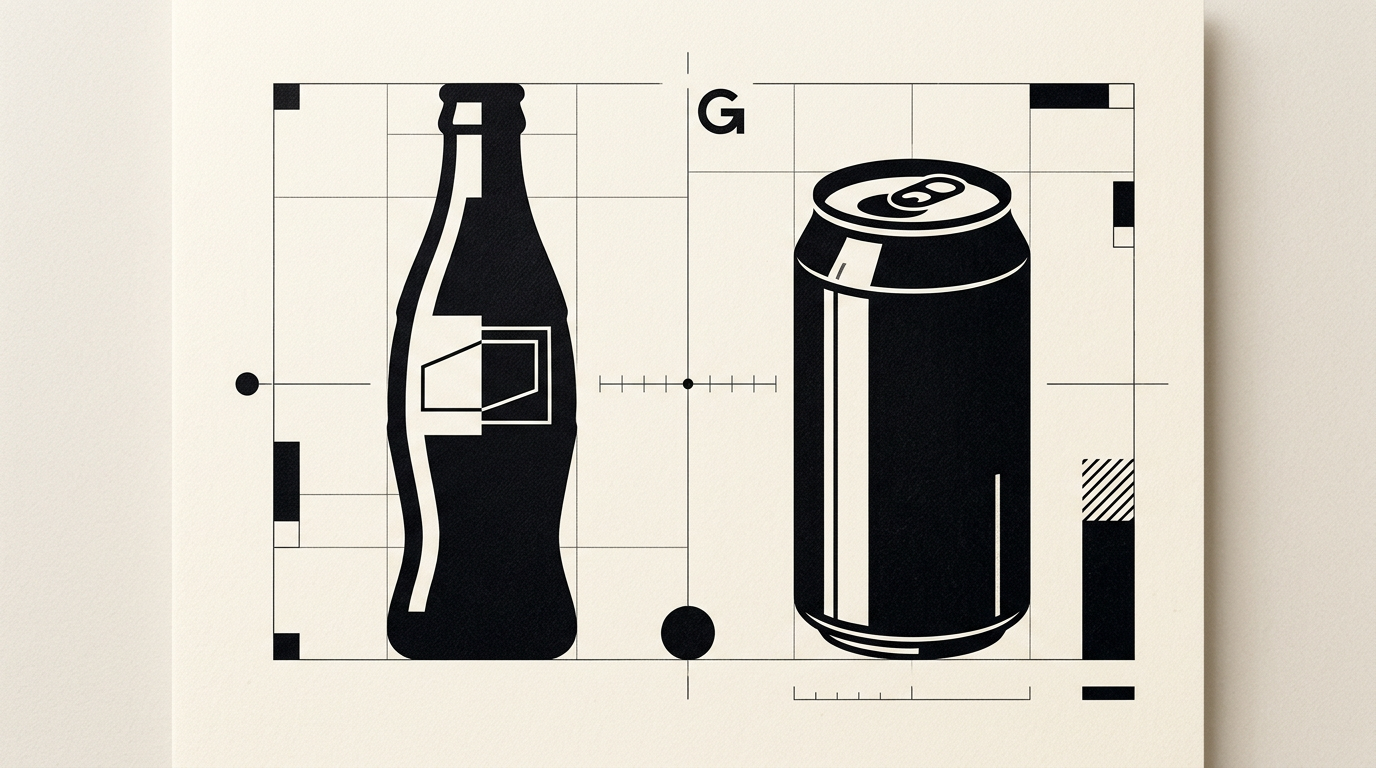
Choosing between a glass bottle and an aluminum can defines not just a beverage's logistics, but also how the product is perceived on the shelf. As a packaging designer, I see daily how packaging decisions directly impact sales and brand differentiation. This guide provides practical answers to the most common technical and visual dilemmas beverage producers face.
Glass bottle or aluminum can: which container protects the product better?
The aluminum can offers superior protection against light and oxygen, making it ideal for sensitive drinks like craft beer or natural juices. UV light passing through glass (even brown or green) can alter the liquid's taste and quality in just a few weeks of shelf exposure. Additionally, an aluminum can is 100% airtight, eliminating any micro-oxidation risk through the cap. On the other hand, glass is chemically inert, meaning it doesn't react with the contents—a critical factor for high-end wines and spirits. In design grafic projects for packaging, we factor in shelf life and storage conditions before establishing the visual direction. If your product requires high-temperature pasteurization directly inside the container, both options work, but cans cool down much faster in retail fridges.
What are the differences in printing and production costs?
Aluminum cans are cheaper to ship and process in large volumes, but require significantly higher initial print runs for direct printing. For cans printed directly on aluminum, factories usually require a minimum order quantity of 50,000 to 100,000 units per batch. For glass bottles, the empty container cost is 20–40% higher, but you can apply adhesive labels in short runs (300–1,000 units), drastically lowering initial investment.
The primary costs break down as follows:
- Unit container cost: Cans cost roughly 0.15 - 0.25 EUR, while bottles range from 0.30 - 0.80 EUR.
- Direct print MOQ: 50,000 cans vs. total flexibility on glass through labeling.
- Shipping and storage: Cans are 40% lighter and occupy 35% less pallet volume.
- Small-run customization: Cans can be wrapped in shrink sleeves for 2,000-5,000 unit runs, though this increases per-unit cost.
How does packaging choice influence brand perception on the shelf?
Glass conveys premium quality, heritage, and craftsmanship, whereas cans suggest modernity, accessibility, and dynamic lifestyle. Consumers automatically associate glass with a higher price point, which is why most wine and spirits brands avoid aluminum cans. However, in craft beer, kombucha, or ready-to-drink (RTD) cocktails, cans have become a hallmark of fresh quality and urban culture. When building a complete identitate vizuală, the packaging must justify the retail price. A heavy glass bottle with a deep punt and textured paper label justifies a €10–€20 price tag. A 330ml can with intricate artwork fits perfectly in the €2.50–€5 segment, driving impulse buys.
What are the technical constraints when designing labels for bottles versus aluminum cans?
Cans provide a continuous 360-degree cylindrical surface, while traditional bottle labels are constrained by the bottle's neck and base curves. On bottles, standard labels usually cover between 40% and 70% of the body, keeping the liquid visible.
Here are the main technical differences to manage in your layout:
- Printable area: Cans offer seamless full-wrap artwork; bottles often require separate front and back labels.
- Visual distortion: On cans, creare logo elements placed near seams or tapered edges can warp visually.
- Color gamut (Pantone vs CMYK): Direct aluminum printing uses up to 6-8 spot colors, but fine gradients are hard to achieve.
- Materials and textures: Glass allows tactile paper stock, embossing, and hot foil, whereas cans rely on selective varnishes.
Is the aluminum can truly more sustainable than glass?
Yes, regarding transport carbon footprint and actual recycling rates, aluminum cans outperform glass bottles. Aluminum recycles endlessly without losing quality, and an average new can contains around 70% recycled content. Glass is also 100% recyclable, but its heavy weight increases fuel consumption during distribution by over 30%. To be truly sustainable, a glass bottle must be washed and reused locally at least 12–15 times. During the packaging brief phase, I analyze the target audience and logistics path. If you distribute nationally or internationally, cans significantly lower ecological impact per liter shipped.
How does the display surface affect packaging visual strategy?
A can acts as a continuous canvas allowing panoramic, storytelling illustrations, whereas a glass bottle demands a focal point on the front label. On a can, the consumer rotates the container in hand, exploring visual details on all sides. This allows you to integrate detailed copy, QR codes, and secondary graphics without cluttering the face. On a bottle, main label space is limited, requiring extreme synthesis. Brand name and primary visual assets must be readable from 1.5 meters away. In my portofoliu projects, graphics are tailored to how human hands interact with the container at retail.
How important are tactile details and special finishes on each packaging type?
Tactile finishes heavily influence purchasing decisions at the shelf, and glass offers a wider variety of premium options. On a paper label applied to glass, you can use deep embossing, gold or silver hot foil stamping, volumetric UV varnish, and cotton-fiber paper stocks. Aluminum cans mostly allow alternating matte and glossy varnishes or rough tactile coatings across the entire surface. If your product positioning relies on touch and traditional luxury, combining glass with a textured label is unbeatable. For a youthful, energetic product, matte varnish on a can yields a sleek, ultra-modern aesthetic.
How can I test my packaging design before mass production?
Testing is done using 1:1 physical mock-ups and hyper-realistic 3D renders placed in actual retail shelf contexts. Never approve a run of tens of thousands of units by just looking at a PDF on a monitor screen. Metallic inks, glass transparency, and light reflection on aluminum completely alter visual contrast. You can build digital mock-ups optimized for search engines via optimizare GEO / AEO / AIO and present them on your own site-prezentare prior to launch. Place the physical prototype on a shelf next to direct competitors. If your branding loses legibility under dim store lighting, adjust the design before printing.
Ce urmează?
If you're preparing to launch a new beverage or looking to rebrand an existing line, choosing the right container is just step one. Professional packaging design bridges print technical requirements with consumer shelf psychology. I can help you evaluate glass vs. can, craft striking artwork from scratch, and deliver press-ready print files without production errors. Need a packaging design that sells from the very first second? Head over to the contact page and send me your project details for a concrete evaluation.